საერთო ცხელი ხაზი +995 577 07 05 63


საერთო ცხელი ხაზი +995 577 07 05 63
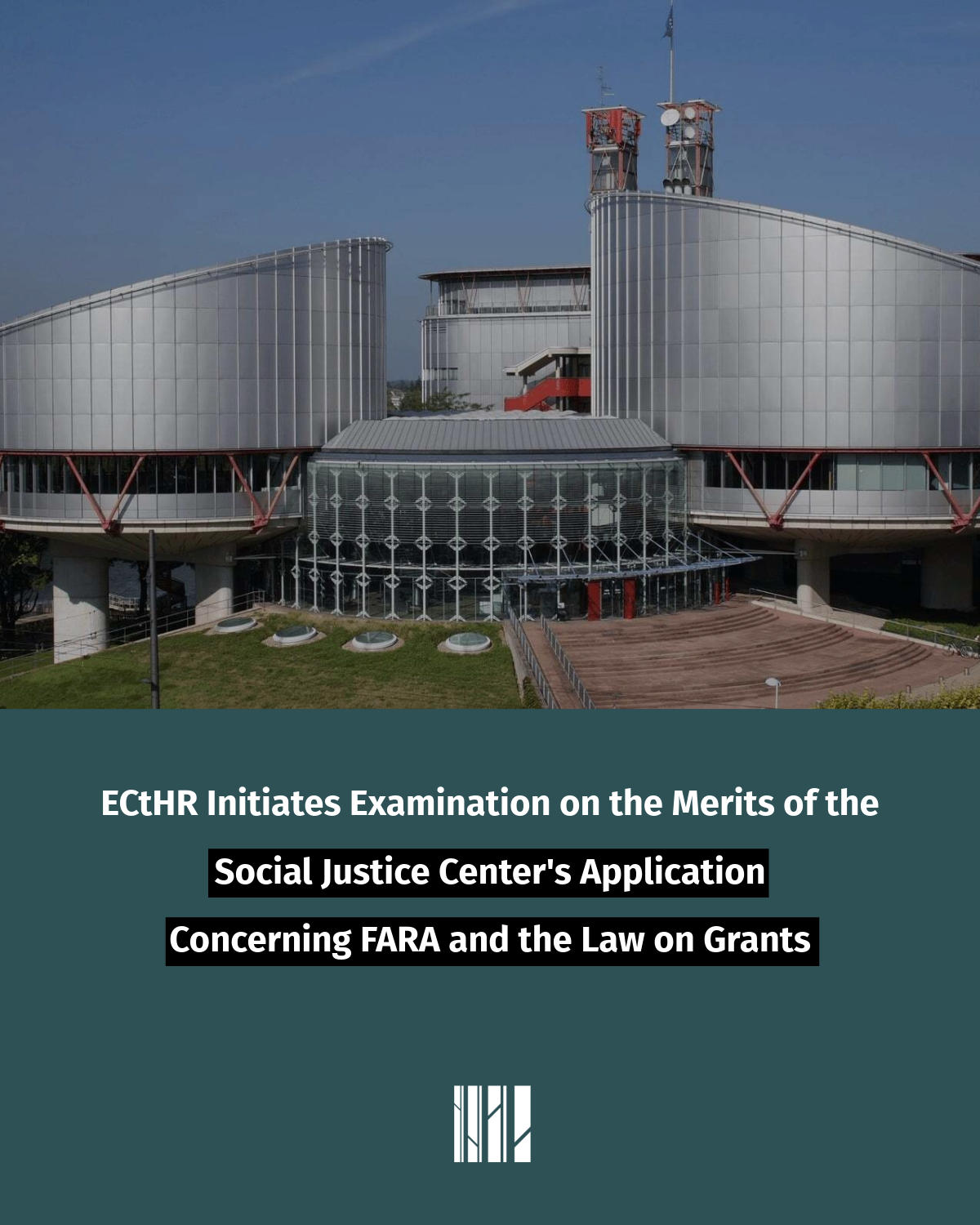
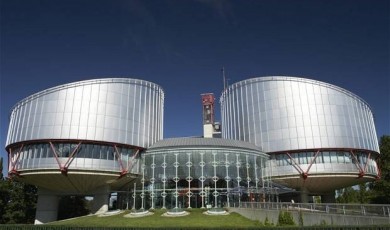
On 25 June 2026, the European Court of Human Rights (ECtHR) informed the Social Justice Center of the commencement of the examination on the merits of another[1] significant case. According to the Court’s communication, the Government of Georgia has been notified of questions concerning the application submitted by the Social Justice Center, its Director, 5 lawyers, and 3 beneficiaries. The application relates to the monitoring procedures carried out against the organization in the summer of 2025 under the Law on Grants and the so-called “Foreign Agents Registration Act” (FARA). In their application, the applicants allege violations of a range of fundamental rights protected under the European Convention on Human Rights, including Article 8 (right to respect for private and family life), Article 10 (freedom of expression), Article 11 (freedom of assembly and association), Article 13 (right to an effective remedy), Article 14 (prohibition of discrimination), and Article 18 (limitation on use of restrictions on rights).
The Court has granted the application the status of a case of significant impact, indicating that it considers the matter potentially capable of influencing the Court’s future jurisprudence, relevant domestic legal frameworks, and broader human rights and societal considerations.
It is also noteworthy that the Court has joined this application with similar cases brought by other Georgian civil society organizations and will examine them jointly.
Factual Background of the Application
As is publicly known, from the spring of 2025, the enforcement of repressive laws adopted by “Georgian Dream” against civil society was significantly intensified. In particular, on 31 May 2025, the “Foreign Agents Registration Act” (so-called FARA), adopted unilaterally by Parliament without democratic deliberation, entered into force. The Act required civil society and media organizations receiving foreign funding to register in a “foreign agents register,” to use a stigmatizing designation in all public communications, and subjected them to intensive state monitoring, an excessive bureaucratic burden of accountability to the state, and criminal liability in cases of non-compliance or improper compliance, alongside other restrictions. [2]During the same period, on 16 April and 12 June 2025, the Parliament of “Georgian Dream” introduced amendments to the Law on Grants, which ultimately prohibited the receipt of foreign funding without authorization from the Government of Georgia. [3] These legislative amendments also granted the executive authorities mechanisms for inspection, monitoring, and sanctioning of organizations.
These legislative changes, among other international actors[4], were strongly criticized and recommended for repeal by the Venice Commission, on the basis that the resulting legal framework undermines the rule of law, civic space, and democratic freedoms. [5]
Immediately following the adoption of the above-mentioned laws, the Anti-Corruption Bureau began their intensive enforcement exclusively against a small number of independent and critical civil society organizations.
Initially, on the basis of an order dated 17 June 2025, the Anti-Corruption Bureau requested from the Social Justice Center (and several other partner organizations), as well as from banking institutions and the Revenue Service connected to us, an effectively unlimited volume of information. This request covered the organizational, institutional, and financial activities of the organization between 1 January 2024 and 10 June 2025, including projects, project reports, contracts concluded with third parties, and data held within the organization concerning beneficiaries and employees, including special categories of personal data.
The Tbilisi City Court ordered the Social Justice Center to submit beneficiaries’ personal data, financial, and other sensitive information without any justification or oral hearing and automatically granted the Anti-Corruption Bureau’s motion without assessing the proportionality of the request.
In our assessment, the request of the Anti-Corruption Bureau and the courts was entirely devoid of any legal basis, did not pursue a legitimate aim, and constituted a disproportionate and severe interference with the internal autonomy of the organization protected under freedom of association and expression, as well as with the rights to private life and equality. Despite our substantiated position, the Tbilisi Court of Appeals did not uphold the complaint.
Ultimately, the Social Justice Center refused to transfer the personal data of beneficiaries and other individuals to the Anti-Corruption Bureau and submitted only information related to the organization’s work. At the same time, the Anti-Corruption Bureau obtained information about our organization from commercial banks and the Revenue Service.
Later, on 8 August 2025, the Social Justice Center and other organizations received a new letter from the Anti-Corruption Bureau, requesting an explanation as to why the organization had not registered as a foreign agent, given that the primary source of its funding consisted of grants issued by foreign donors, and that, in its assessment, the organization’s activities qualified as “political activity” for the purposes of FARA. The Bureau also emphasized the criminal liability provided for under FARA in the event of failure to register.
It should be noted that the Social Justice Center sent a detailed letter to the Anti-Corruption Bureau, in which it extensively reviewed the history and practice of the adoption and application of FARA in the United States, and argued that independent civil society and media organizations - those that have for years operated independently in accordance with their statutory objectives, independently define and implement their own agenda and mission, and have multiple donors and partners - cannot be regarded as foreign agents within the meaning of FARA. [6]
Ultimately, the procedure initiated by the Anti-Corruption Bureau against the Social Justice Center was not concluded even after the expiry of administrative deadlines. Shortly thereafter, information was circulated that the Anti-Corruption Bureau was abolished as of 1 March 2026. [7]
Despite this, the framework established by FARA and the Law on Grants, and its severe impact on the functioning of civil society organizations, including ours, as well as the investigation under the so-called “sabotage case,” the freezing of the Social Justice Center’s bank accounts on 27 August 2025, and ongoing hostile and disinformation campaigns against the organization, had a devastating impact on the organization.
The substance of the application lodged before the European Court of Human Rights
In its application before the Strasbourg Court, the Social Justice Center argues that the Anti-Corruption Bureau’s demand for extensive disclosure of information concerning the organization’s activities, finances, and beneficiaries amounted to a violation of Articles 10 (freedom of expression) and 11 (freedom of assembly and association) of the European Convention on Human Rights.
The applicants further submit that such interference also constitutes a breach of Article 8 of the Convention (right to respect for private life), both in respect of the Social Justice Center as a human rights organization and in respect of its lawyers. This is because the disclosure of the requested information would infringe lawyer–client confidentiality protected under the Law on Lawyers. A violation of this right is also alleged in relation to the organization’s beneficiaries, as the disclosure of the requested data would reveal their connection to the organization, as well as expose personal data of a sensitive nature held by the organization.
In the application, the Social Justice Center further argues that the Anti-Corruption Bureau’s demand was discriminatory against the organization, its Director, and its lawyers, in violation of Article 14 of the Convention in conjunction with Articles 8, 10, and 11. It is alleged that the organization was targeted by the Anti-Corruption Bureau precisely because of its human rights work and its critical stance towards government policies.
The application also contains a critical assessment of the “Foreign Agents Registration Act” (FARA) and the amendments to the Law on Grants, stating that both legislative acts interfere with the freedom of association and expression of civil society organizations. It is argued that FARA requires organizations and their staff to register under a stigmatizing label and to include this status in all public communications. Furthermore, organizations are subjected to arbitrary and vaguely defined inspection and monitoring mechanisms, while failure to register or breaches of registration rules may expose organizational representatives to criminal liability. In turn, the amendments to the Law on Grants broaden the definition of a “grant” and extend the requirement of prior governmental authorization and substantive control to all foreign funding. In both cases, non-compliance exposes organizations to severe sanctions, which have a substantial impact on their activities and very existence. The application further submits that these laws contain overly broad, ambiguous, and vague definitions and grant the Anti-Corruption Bureau excessive and virtually unrestricted powers.
The application also argues that the applicants did not have access to an effective remedy within the meaning of Article 13 of the Convention against these alleged violations. This is because the Constitutional Court, when reviewing the constitutionality of the challenged legislative acts, conducts only abstract review and its decisions are subject to significant delays, while the ordinary courts in practice systematically uphold the Anti-Corruption Bureau’s requests without proper examination or reasoning.
Finally, within the scope of the application, the applicants allege a violation of Article 18 of the Convention, arguing that the true purpose of the Anti-Corruption Bureau’s demands, as well as the adoption of FARA and the amendments to the Law on Grants, is to silence and dismantle critical organizations, rather than to pursue any legitimate aim under the Convention. The existence of such a hidden and improper purpose is, in the applicants’ submission, evidenced by the sequence of measures taken: the adoption of repressive legislation targeting NGOs and independent media, discrediting campaigns conducted by government-affiliated media, and continuous attacks by government officials against the Social Justice Center.
Questions put by the European Court of Human Rights to the Government in the course of proceedings
The European Court of Human Rights has declared the case admissible for examination on the merits and, in the questions addressed to the Government of Georgia, has essentially reiterated the applicants’ claims and arguments. In particular:
In this regard, the Court specifically inquired:
Whether the obligation to register as a “foreign principal’s agent” carries a stigmatizing effect, taking into account linguistic nuances in the Georgian language, and whether this may have a detrimental impact on the organization’s activities;
Whether the definition of a “foreign principal” under Georgian FARA meets the requirements of necessity, relevance, and sufficient justification under Article 10 § 2 and Article 11 § 2; in particular, whether the law sufficiently defines the “agency relationship” between foreign principals and their local agents so as to prevent overly broad or abusive interpretation;
Whether the requirement of prior authorization for receiving foreign grants under the amendments to the Law on Grants complies with the requirements of necessity, relevance, and justification under Article 10 § 2 and Article 11 § 2;
Whether the sanctions imposed for breaches of Georgian FARA and the Law on Grants are proportionate to the seriousness of the alleged violations.
The European Court of Human Rights has set 15 October as the deadline for the submission of the Government’s responses to the above questions.
Conclusion
The recent legislative amendments adopted in Georgia and the forms of their practical enforcement have substantially altered the environment in which independent civil society operates. The institutional framework for civil society has become significantly restricted, repressive, and has reached a point where it is at risk of systemic dismantlement.
The laws adopted by “Georgian Dream,” which aim at stigmatizing civil society organizations, strengthening state control over sources of funding, internal operations, relations with partners and beneficiaries, and introducing severe criminal liability, have in practice made it extremely difficult for independent and critical civil society to function freely in Georgia. It is therefore evident that the impact of such regulation is not limited to the activities of specific organizations, but ultimately affects the openness of the public sphere, the protection of human rights, and the quality of democratic processes in the country. For this reason, the examination of this application, together with related cases, will have a decisive impact on the restoration of violated rights of civil society organizations and their normal functioning.
Civil society has been one of the key institutional actors in Georgia’s contemporary development process. It has played an important role in the protection of human rights, monitoring the work of state institutions, assessing public policy, representing vulnerable groups, and defending the public interest. However, the Georgian Dream government has targeted this living, diverse, and independent structure of Georgian democracy and has set its dismantling as a policy objective. It is therefore not coincidental that, in the process of democratic backsliding, civil society organizations were among the first targets of attack.
In our view, the present case is of particular importance, as it brings together a number of fundamental issues, including freedom of association, freedom of expression, the right to respect for private life, the right to an effective remedy, and the limits of the exercise of state power. In addition, the case requires assessment of whether legislative regulation and its enforcement in practice may function as a mechanism of pressure that impedes the free exercise of activities by independent civil actors. Accordingly, the decision of the European Court in this case may have significant implications for the effective protection of the rights of civil society organizations in Georgia, the strengthening of their institutional independence, and the definition of legal standards ensuring the protection of civic space in a democratic society.
The Social Justice Center will continue to regularly inform the public about the progress of the case and subsequent developments.
[1] Social Justice Center, “The European Court Has Commenced Examination on the Merits in the Case Concerning the Freezing of Assets of Five Civil Society Organizations,” available at: https://socialjustice.org.ge/ka/products/evropulma-sasamartlom-5-samokalako-organizatsiis-daqadaghebis-sakmeze-arsebiti-gankhilva-daitsqo
[2] Social Justice Center, “FARA Does Not Apply to Civil Society and Media Organizations: The Practice of FARA in the United States and Its Safeguarding Constitutional and Legal Standards,” available at: https://socialjustice.org.ge/ka/products/ratom-ar-vrtseldeba-fara-sinamdvileshi-samokalako-da-media-organizatsiebze-ashsh-shi
Social Justice Center, “Notable Differences Between the U.S. FARA and Its Georgian Version – Overview of Preliminary Observations,” available at: https://socialjustice.org.ge/ka/products/shesamchnevi-ganskhvavebebi-ashsh-is-fara-sa-da-misi-kartuli-versiis-shoris-pirveladi-dakvirvebebis-mimokhilva
Social Justice Center, “FARA-Model Legislation in Georgia Does Not Comply with the Standards of the European Convention on Human Rights – Legal Analysis of the Council of Europe Experts’ Opinion,” 04.09.2025, https://socialjustice.org.ge/ka/products/fara-s-modelis-kanonmdebloba-sakartveloshi-ar-sheesabameba-adamianis-uflebata-evropuli-konventsiis-standartebs-evropis-sabchos-ekspertta-daskvnis-samartlebrivi-analizi
[3] Social Justice Center, “The Amendments Introduced to the Law on Grants Aim to Destroy Georgian Civil Society – Assessment,” 17.04.2025, https://socialjustice.org.ge/ka/products/grantebis-shesakheb-kanonshi-gatarebuli-tsvlilebebis-mizania-kartuli-samokalako-sazogadoebis-ganadgureba-shefaseba
Social Justice Center, “The Proposed Amendments to the Law on Grants Aim at the Destruction of Civil Society in Georgia,” 13.06.2025, https://socialjustice.org.ge/ka/products/grantebis-shesakheb-kanonshi-initsirebuli-tsvlilebebi-sakartveloshi-samokalako-sazogadoebis-ganadgurebas-isakhavs-miznad
[4] OSCE Fact-Finding Mission on Georgia (2026) under Paragraph 12 of the Moscow Mechanism Document, Report on Developments in Georgia in Respect of Human Rights and Fundamental Freedoms since Spring 2024, by Professor Patrycja Grzebyk, Sole Rapporteur
Amnesty International, Georgia: Authorities Built Coordinated System to Crush Dissent and Entrench Power, 15 June 2026, https://www.amnesty.org/en/latest/news/2026/06/georgia-authorities-built-coordinated-system-to-crush-dissent-and-entrench-power/
[5] Venice Commission publishes Opinion on the Law of Georgia on registration of foreign agents, the amendments to the Law on grants and other Laws relating to “foreign influence”, 15.10.2025 https://www.coe.int/en/web/portal/-/venice-commission-publishes-opinion-on-the-law-of-georgia-on-registration-of-foreign-agents-the-amendments-to-the-law-on-grants-and-other-laws-relating-to-foreign-influence-
[6] Social Justice Center, “Georgian Dream Continues the Persecution of Civil Society Organizations – Social Justice Center Publishes the Text of Its Written Explanation Submitted to the Anti-Corruption Bureau,” 27.08.2025, https://socialjustice.org.ge/ka/products/kartuli-otsneba-agrdzelebs-samokalako-sazogadoebis-organizatsiebis-devnas-sotsialuri-samartlianobis-tsentri-antikoruftsiul-biuroshi-gagzavnili-tserilobiti-ganmartebis-teksts-akveqnebs
[7] Civil.ge, “From Today, the Functions of the Anti-Corruption Bureau Will Be Performed by the State Audit Office,” 02.03.2026, https://civil.ge/ka/archives/723192
The website accessibility instruction