საერთო ცხელი ხაზი +995 577 07 05 63


საერთო ცხელი ხაზი +995 577 07 05 63
Introduction
The reform of the higher education system is a political and legal process of strategic importance for any state, as it is directly related to both fundamental human rights and the socio-economic development of the country. For many years, education experts have been talking about the problems existing in the system and the need to solve them, however, due to the lack of political will, this issue remains unresolved.
In October last year, the “Georgian Dream” announced a new wave of education reform, which was developed without the participation of the academic community and specialists in the field and is being carried out with gross interference in the principle of university autonomy and the right to academic freedom. In this process, a number of legislative amendments were introduced, through which the governing party legally secured complete control over the management system of state universities.[1]
Among the 7 essential problems identified in the National Concept for the Reform of the Higher Education System (hereinafter „Concept“) presented by the Georgian Dream, which the higher education reform aims to solve, are:
The Concept and the draft laws submitted to Parliament later generally list the existing problems, but do not specify how and on what basis such radical changes in the education system became necessary. Representatives of the Georgian Dream point to a certain market research that, despite the demands of academic circles, was not available to the public for a long time.[3] On February 24, Irakli Kobakhidze held a presentation of the results of the labor market research analysis.[4] According to him, the data shows that approximately 14,400 students should be admitted to universities annually, thus the number of students should be gradually reduced, and the education reform will ensure this.[5] According to the published market analysis, there is an overabundance of people with higher education in the employment structure, including in sectors such as: trade, administrative and support service activities, accommodation and food service activities (where vocational and general education should normally be dominant).[6]
As a way to solve the "problems" identified within the framework of the market research, the Georgian Dream presented initiatives such as increasing the role of other large cities of Georgia in terms of academic workload and the principle of "one city - one faculty", which essentially implies the concentration of similar faculties existing in different universities on the basis of one university, "taking into account their traditional profile and historical experience."[7]
1. New Quota System
On February 12, Georgian Dream Minister of Education Givi Mikanadze presented a list of programs that state universities will have the right to implement as part of the education reform developed by the government team, starting from the 2026-2027 academic year.[8]
According to official data from the National Assessment and Examination Center, 31,704 applicants were enrolled in higher education institutions throughout Georgia in 2025. Of these, 21,538 applicants/first-year students were enrolled in 19 state universities. According to Givi Mikanadze, the number of applicants last year was 19,311.[9] According to him, the number of students admitted to state universities will increase by approximately 2,000 students and will be determined at 21,300. However, in 2025-2026, the number of places available at state higher education institutions, also according to NAEC, was 27,204, and according to the resolution, the number of places available for the 2026-2027 academic year (i.e., this year) is 21,300.
It turns out that the number of places announced for the 2026-2027 academic year is already less than the total number of students enrolled last year. It should also be noted that the number of places announced does not always equal their full filling. For example, last year, 79% of the places announced at state universities were filled. It is likely that even fewer students will be admitted this year. This may also be due to the fact that admissions have increased for many programs for the 2026-2027 academic year that were not in demand last year, so it is likely that students will again apply to their desired faculties at private universities, and the number of places filled at state universities will decrease.
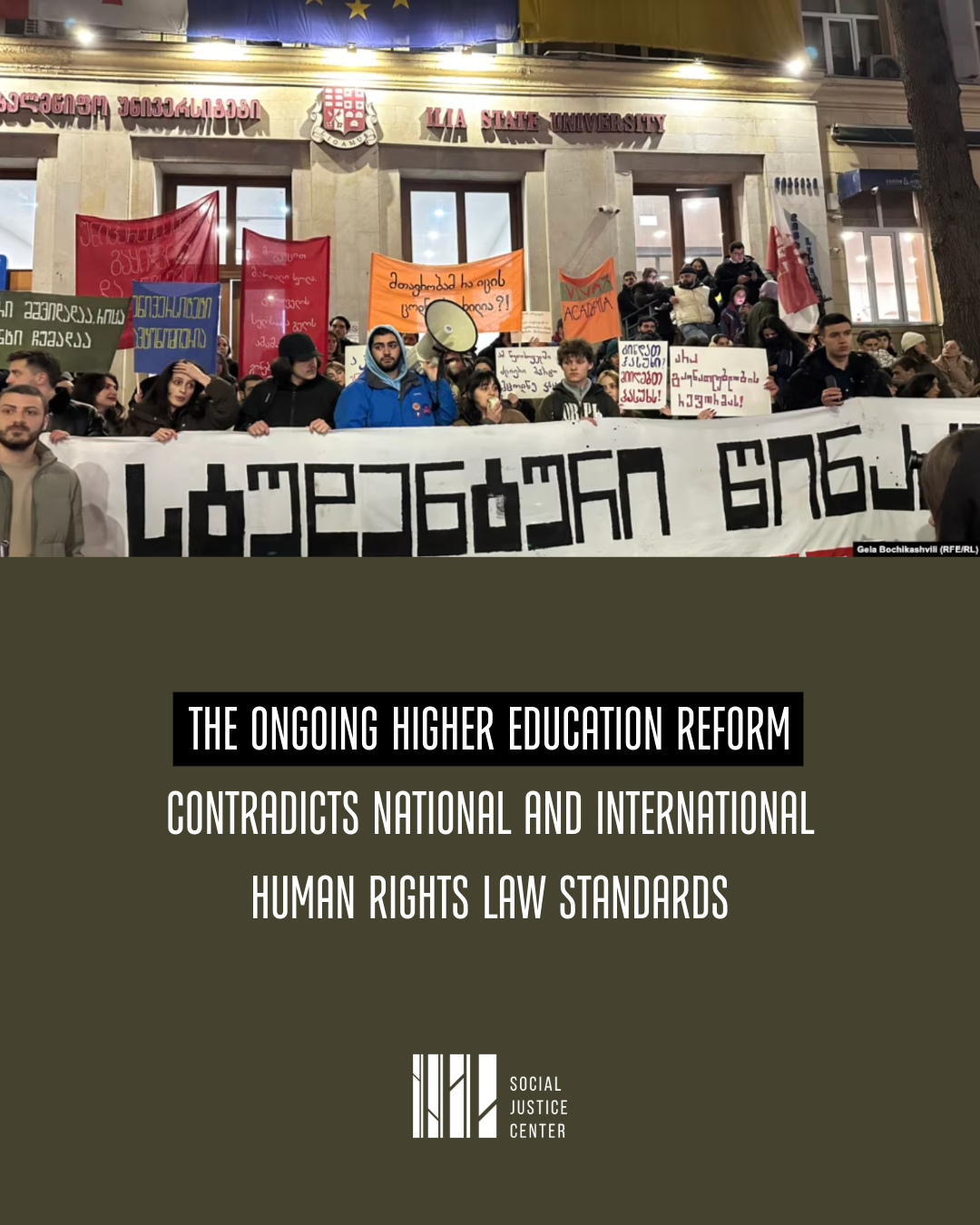
By the decision of the Georgian Dream, a number of state universities were restricted in their authority to implement certain educational programs. This decision hit one of the largest in Georgia, Ilia State University, hardest, with only 16 programs left out of the existing 36 (only two directions - pedagogy and STEM specialties with ABET accreditation). As a result, if last year the number of places for admission to bachelor's programs at Iliauni was 4,207, this year it will be able to accept only 300 new students, which is 14 times (approximately 92%) less than last year's quota.[10] The School of Law, as well as a number of specialties in the Faculty of Sciences and Arts, are being abolished, including international relations, political science, liberal arts, sociology, film studies, psychology, etc.[11] Similarly, Sukhumi State University has been stripped of a number of faculties and will only continue to accept students in the fields of pedagogy and agricultural sciences.[12]
Although there are no plans to reduce the number of students for the next academic year, it is unclear to labor market experts why the reduction in the number of students per faculty was based only on the aforementioned study, where, according to the authors of the reform themselves, there are specialties that are not reflected in the labor market demand at all, but their development should be an area of national interest, a strategic issue, a national security issue, an issue based on foresight, etc. For example, labor market analysis cannot give us accurate information about how many philosophers or Armenologists the country needs annually. In addition, faculties for which, according to market research, there was a particularly high demand and low employment rate remain in private universities. For example, 20 quotas were set for the astrolinguistics and astroarchaeology programs. There are 40 places announced for the bachelor's program in Iranian studies (30 at TSU and 10 at Kutaisi University), and 30 for the bachelor's program in sociology (at TSU), while the scope and opportunities for employment for sociologists can be assumed to be greater than for Iranian studies.[13]
The merger of faculties will lead to a reduction in the contingent at public universities, which, in turn, will contribute to increased competition. As a result, the chances of enrolling in a public university will most likely decrease for children from the least privileged and less affluent families. In addition, their opportunity to study at private universities on favorable terms will be limited, since grant funding will be abolished at private universities.
This initiative is part of the Georgian Dream's higher education reform, on which the Government Commission for Higher Education Reform has been working since January 2025.[14]
According to the published document:[15]
Tbilisi State University will accept students in such areas as exact and natural sciences; humanities, excluding pedagogy; law; economics and business administration; social and political sciences.
Admissions will be announced at the Georgian Technical University for engineering and technical disciplines.
At Tbilisi State Medical University - for medical specialties.
At Ilia State University - for pedagogy programs and STEM specialties with ABET accreditation.
At Sukhumi State University - for agrarian specialties, Georgian-Abkhazian language and literature and pedagogy specialties.
Universities of Arts and the University of Sports will accept students in the relevant specialties.
Batumi and Kutaisi universities will maintain their multifunctional profile.
At the universities of Zugdidi, Gori, Akhaltsikhe and Telavi, the emphasis will be on agricultural specialties, tourism and pedagogy.
At this stage, in the resolution approved by the government, the agricultural direction temporarily remains at the Georgian Technical University, therefore, admission will be announced under the name of the Technical University. However, in a few months, the agricultural direction will be transferred to the subordination of Sokhumi State University.
According to the approved resolution on the number of admitted students, the number of admitted students to the bachelor's and master's programs of the Faculty of Social and Political Sciences of TSU will be reduced by 40%.
At the university level, the total number of students at TSU, GTU, Batumi University and Tbilisi State Medical University is increasing, and the programs of Ilia State University are especially reduced.
The number of admitted students at Ilia State University is decreasing by 92%.
For example, Ilia State University admits students in four directions:
If the changes are implemented, the university will have 1 incomplete faculty and 16 programs. In 2025-2026, the university will admit about 5,000 students, and next year only 300 students will be enrolled.
According to the amendment, the Government of Georgia, upon the proposal of the Ministry of Education, will determine for universities a list of educational programs (curricula) that they are entitled to implement. Also, universities will be able to determine the main directions of educational, research and creative activities only in accordance with this list. According to the same legislative amendment, the Government approves the number of admitted students according to the higher educational institution and educational programs (curricula).
When a university applies for accreditation of a specific program, one of the obligations is to conduct a labor market study in this direction. This study creates an idea of the market situation. Accordingly, information about this already exists. The transition to a centralized research model, and then, on this basis, the establishment of quotas in universities, significantly reduces the institutional autonomy of universities and resembles the Soviet-type education model, according to which the state could determine any economic, social or political need.
Determining student quotas in state universities according to state orders and the labor market is a gross infringement of academic freedom, which significantly undermines the function and goals of higher education. The goals of higher education include (but are not limited to) the formation of an autonomous and responsible personality, the realization of personal interests and intellectual and creative potential, the preparation of a person for employment in a changing environment, the formation of a democratic and humane society, and the contribution to solving local and global challenges through scientific, research and innovative approaches. Accordingly, the state-ordered and labor market-based approach to higher education limits both the function of universities and the ability of students to acquire the advanced knowledge, competencies, and values needed to live a full life in a changing environment and address current challenges.
2. Analysis of the reform in the context of national legislation
2.1 Procedural legality and the paritcipatory principle
The current legislation on higher education obliges the state to ensure the participation of academic staff and students in the decision-making process. According to the Law “On Higher Education”, the participation of academic staff, scientific staff and students of higher education institutions in the decision-making process and control over its implementation is ensured. The explanatory note to the reform indicates that university representatives, independent experts and international institutions did not participate in the process. Accordingly, it is unknown by what criteria specific changes were selected, what impact they will have on academic staff and students, what alternative ways were considered during the development of the Concept and why it became necessary to implement such rigid, accelerated, large-scale and unjustified changes.
The principle of participatory governance is one of the central elements of modern administrative law. Its neglect is not only a procedural defect, but also calls into question the legitimacy of the decision taken. Particularly problematic is the fact that one of the main bases for the reform is the labor market survey, the data of which were not known to the academic sphere before the announcement of the reform. Especially when the representatives of the “Georgian Dream” themselves made comments that the market survey could not assess all areas and that there may indeed be faculties where the announced quotas are less than the real demand. In addition, determining quotas on the basis of such a study, and even more so, canceling programs, is irrational.
It is worth noting that the lack of transparency violates the principle of accountability and limits the ability of society to assess the necessity and effectiveness of the reform.
It is noteworthy that without any substantive discussion and approval of the amendment, the implementation of legislative amendments had already begun in November. For example, on November 11, 2025, an amendment was made to the Rules for Conducting Unified National Exams, according to which universities must submit questionnaires on student admission quotas to the Higher Education Management Information System by February 9, 2026.[16]
On December 10, 2025, in order for the Government of Georgia to be authorized to determine the curriculum of educational programs, amendments were also made to the Law on Higher Education, according to which (among other changes), grant funding was abolished and it was determined that the Government of Georgia will be authorized to determine for universities the list of educational programs (curricula) and the number of students to be admitted according to the programs. According to the explanatory note, the quantitative distribution of quotas when admitting students to universities is currently not based on an in-depth analysis of the existing and potential demands of the labor market. Accordingly, the law stipulates that the Government of Georgia, upon the recommendation of the Ministry of Education, Science and Youth of Georgia, will annually approve the number of students admitted to state-established higher education institutions with and without passing unified national/master's exams - both according to specific higher education institutions and their educational programs (curricula).[17] In addition, the law stipulated that the Government of Georgia would approve the rules and conditions for financing state-established higher education institutions.
Such centralization effectively changes the right of universities to determine academic policy and leads to a substantial restriction of institutional autonomy.
In addition, given the scale of the reform and its fiscal, institutional and social impact, it was appropriate to prepare a regulatory impact assessment document. Although the relevant government resolution does not consider such an assessment to be mandatory in the field of education, it allows for an impact analysis to be carried out by the initiator when preparing a draft of any normative act. The absence of such an analysis reduces the quality of the decision and increases the risk of arbitrariness.[18]
2.2 Grant Policy Change
According to the Concept, the funding system has also been changed, which has been completely replaced by State endorsed financing.
According to the explanatory note, in order to improve the higher education financing system, the current grant system should be replaced with a financing model based on the state order, within which a state order is determined for each university based on the state's objectives. However, the explanatory note does not indicate how and why this will lead to an improvement in the education system.
According to the Law on Higher Education, public universities will receive funding from the state budget. In addition, students enrolled in private universities will not be able to receive funding from the state budget. Students enrolled in public universities, according to the announced plan, will not have to pay tuition fees, however, it is unknown whether funding for universities will be provided based on the number of enrolled students and whether the funding, currently set at 2,250 GEL per student, will increase.
Under the current system, a student study grant is provided for both state and private higher education institutions. With the changes, students at private universities will not be able to benefit from state funding, which will result in a change in the number of those wishing to continue their studies at higher education institutions established in the legal form of private law and will affect the revenues of universities. The authors of the reform themselves draw attention to this problem, however, it is unclear what alternatives the “Georgian Dream” offers to students, against the backdrop of the abolition of quotas at state universities.
This will, of course, increase competition and, as a result, the children of the least privileged and less affluent families will most likely lose their chance of enrolling in a public university. They will also lose the opportunity to study at private universities on favorable terms. When the state directly finances a student, especially a young person with a low income, it increases access to education. In such a model, the financial barrier is reduced and freedom of choice acquires real meaning. In conditions where the number of students is increasing and competition for admission is intensifying, a voucher system can become an effective mechanism for reducing social inequality.
The current voucher system, despite its shortcomings (which are mainly related to its symbolic value and homogeneity), ensured a minimum standard of competition. On the one hand, it increased the motivation of the entrant to get the best possible grades in the national exams and obtain state funding, and on the other hand, it was a motivation for the university to improve quality in order to attract as many students as possible. Under the current system, state funding is mainly provided through study grants. Based on the results of the Unified National Exams, entrants receive a 100%, 70%, 50% state grant, which covers the tuition fee with an appropriate percentage.
In addition, there are social programs that provide support for socially vulnerable, destitute, and students displaced from occupied territories. There are also targeted and special programs that are designed for priority areas related to professional needs determined by the state, and students with disabilities at this faculty also received 100% funding.
The voucher financing system in the field of higher education becomes important when the state is faced with a dilemma - how to ensure access to education, quality improvement, and regional development without harming the autonomy and academic freedom of universities. It is in this context that the voucher model is a tool that combines the principles of social responsibility and institutional independence.
According to the data of the 2024-25 academic year, a total of 187,800 students were enrolled in higher education institutions. 42% of students study at private universities. The number of students at private universities is increasing year by year. This is due to the fact that the existing voucher system, which also follows students to private universities, ensures both accessibility and student choice. The voucher system is based on the idea that the state finances the student, not a specific university. This means that public resources follow the choice of the individual. In such a model, decision-making power is distributed from the center to society - the student becomes an active subject, and universities are forced to prove their quality and reputation in competitive conditions.
With the concept that funding will no longer be tied to the student and will be completely determined by the goals of the state, the center of attraction for universities will change. After the change, the Ministry of Education will have the main financial lever in its hands, since the university will depend not on the student, but on the funding of the Ministry of Education.
With the change in the funding model, the form of the relationship will also change. In the new model, the student's interest is no longer evident. Theoretically, the student, due to the fact that only one state university in one city will have a specific direction, and a private university will no longer receive grant funding, may even have limited decision-making space. Due to limited places at a state university, he may have to a) transfer to another city; b) choose another direction against his will. It turns out that the existing relationship between the state, student and university - a triangle - is actually shifting to a two-actor relationship between the state and the university, and the student is no longer an active participant in this relationship.
Voucher financing protects pluralism. When funding is tied to a specific institution and program distribution is centralized, the risk of monopoly increases. A university that cannot provide high-quality education will not be able to attract students and, consequently, will lose funding. Thus, quality control is carried out not only through regulation, but also through a demand mechanism. It is a tool that forces institutions to develop programs, update the curriculum, strengthen the research component and attract qualified academic staff.
The financial dependence of state universities on the government will also increase by restricting the admission of foreign students. The largest part of the independent income of these universities is provided by the admission of foreign students. According to the Concept, state universities should admit foreign students only in exceptional cases provided for by legislation. This approach is problematic both financially and academically. Foreign students, in fact, finance the education of Georgian students - the money received from them makes it possible to prevent the cost of state universities in the country from increasing at a time when prices in other sectors are growing very rapidly.
Restricting the admission of foreign students will make education more expensive for Georgian students, since universities will no longer be able to compensate for the much higher cost of the service, which they provide to Georgian students for 2,250 GEL, with the income received from foreign students. Accordingly, theoretically, there are two options left - a significant increase in price or a deterioration in quality. This approach also contradicts the European principles of global mobility and internationalization, the observance of which is one of the conditions for membership in the Bologna Process.[19]
Administratively distributing programs actually increases central control, while voucher funding distributes the decision-making process among multiple entities - the state, the student, and the university. The state can set priorities, for example, by offering increased vouchers to regional universities, but it does not limit the structural diversity of the academic space. Thus, the goal of regional development is achieved organically, not by force.
The higher education system in a democratic state should be based on a balance of freedom and responsibility. Voucher funding creates precisely this balance: the state maintains a social function and provides funding, while universities maintain strategic and academic autonomy. This model reduces the risk of monopolization, protects pluralism, strengthens competition, and promotes the development of quality without contradicting constitutional principles. At this stage, it is still unclear what specific mechanism will replace the current model and how it will ensure the effective functioning of the system.
2.3 Excessive geographical concentration - one city - one faculty
The Concept names the excessive concentration of universities in Tbilisi as one of the main problems. According to Irakli Kobakhidze, in order to solve this problem, it is important to form two educational centers in the country - in Tbilisi and Kutaisi. The new infrastructure of the universities operating in Tbilisi should be developed in such a way as to maximally contribute to the decongestion of the capital and the creation of new opportunities for the development of the city of Rustavi.
In addition, according to the Concept, regional universities will be renewed in the country, which will have a relatively narrow profile and will mainly combine pedagogical and agrarian directions.
The high rate of urbanization of the capital is caused by many social factors: for example, the fact that the country naturally has one economic center - Tbilisi, which, according to 2023 data, covers more than 52% of the country's gross domestic product. The second place in the regional distribution is occupied by the Autonomous Republic of Adjara, whose share in GDP is 9.8% - about 5 times less than Tbilisi. Such a distribution is due to weak self-government and fiscal decentralization. Migration from the regions to Tbilisi occurs due to a number of factors, mainly economic and social. The high rate of urbanization cannot be solved in isolation by an education reform that involves the artificial migration of students and academic staff from one city to another. Even if we assume that the artificial opening of universities will activate socio-economic processes in the regions, as stated in the Concept, this cannot be the goal of higher education reform. It can be the subject of self-government policy or fiscal policy. The proposed way to solve the problem is inconsistent with the stated goal - decentralization-deconcentration - also because the means themselves contradict this goal. Decentralization in itself implies strengthening self-government, real delegation of power from the center, which cannot be achieved by determining for state universities which direction should be taught where.[20]
Education experts point out that the „one-city-one-faculty“ system is unjustified for Georgia, because, for example, Kutaisi International University, despite its developed infrastructure, failed to attract the appropriate number of students: only 1,645 students were enrolled in the university in 2025-2026. A large number of unfilled places remain precisely in those directions that should be the most popular for this university. For example, 62% of the places allocated for the 2025-2026 academic year in the direction of computer science remained unfilled, and 60% in the directions of mathematics and applied mathematics. Accordingly, the development of infrastructure alone does not determine the attraction of students.”[21]
One of the main arguments for the reform is the reduction of geographical concentration. However, from a legal point of view, decentralization implies the transfer of powers from the center to the lower level, and not vice versa.
The centralized distribution of programs and the determination of quotas represent the concentration of administrative power in the executive branch. Such a model contradicts the classical understanding of decentralization and creates a legal paradox: the declared goal is decentralization, and the tool used is centralization.
In addition, the problem of urbanization, which is related to the economic structure of the country and the level of fiscal decentralization, cannot be solved only by reorganizing the education system. The geographical distribution of universities cannot replace economic development policies.
The optimization argument is formally based on the idea that concentrating resources and reducing duplicative programs will increase efficiency. However, efficiency does not automatically mean quality. In the university system, quality is formed in the conditions of pluralism, institutional autonomy and competition. When the state administratively determines that a specific direction should be taught only in one city or one university, this means that alternative academic spaces disappear. There is no competition between programs, no competition of academic visions, no coexistence of diverse research schools. In such a situation, the natural incentive to improve quality weakens.
From a constitutional point of view, especially if we take into account the principles of academic freedom and university autonomy, pluralism is not simply an organizational issue, it is a value foundation. The university as an institution should be a space for the competition of ideas. When the distribution of programs is centralized, the university loses its freedom of strategic development. This damages not only the autonomy of a specific institution, but also the diversity of the academic environment as a whole.
Among them, as mentioned, it is important to answer the test of suitability, whether the concentration of programs really creates a real prerequisite for quality improvement? If competition is removed from the system, in the conditions of a single provider, quality control is completely transferred to the administrative supervision of the state. This transforms the university not into a self-governing academic entity, but into a governing body. In such a case, quality improvement depends not on internal academic dynamics, but on central decisions, which in itself contradicts the classical model of the university.
The optimization argument also requires a deeper analysis of the legitimate goal. If the goal is the efficient use of resources, there must be evidence that duplication actually leads to a decrease in quality or financial unsustainability. Otherwise, the multiple existence of programs can be a guarantee of competition and freedom of choice. “Optimization” in the field of education cannot be just an economic category, because a university is not just a cost-accounting unit — it is a space for free thought and research.
Therefore, there is a reasonable doubt that the chosen model does not meet the constitutional standard of suitability. If the means reduce pluralism, restrict competition and weaken the natural mechanisms of quality, then it is difficult to justify that it objectively serves the declared purpose. Moreover, it can be said that the means lead to the opposite result of the purpose, making the system more monolithic, less dynamic and less self-regulating.
As a result, even the presence of a legitimate purpose cannot ensure the constitutionality of the measure if the chosen instrument is not only unnecessary, but itself undermines the values, the protection of which is the essential basis of the higher education system.
The introduction of the “one city – one faculty” format also indicates a possible reduction in the number of students admitted. It is unlikely that any other public university in Tbilisi will be able to absorb the entire number of students admitted to any major field of study if this field is canceled. The reduced student admission quota will especially reduce access to higher education for students who will graduate from grades 11 and 12 simultaneously in 2028. Taking into account the trends of previous years, approximately 53,600 twelfth-graders and approximately 51,000 eleventh-graders will graduate in 2028, a total of more than 100,000 applicants. Against this background, there are approximately 45,000 places available for admission to all universities, of which only about 31,000 are filled annually. This means that more than 50,000 young people will not have the opportunity to start studying at a higher education institution in 2028, while admission quotas will not increase. This not only reduces access, but also exposes sharp social inequalities - the chance of getting into university will depend on socio-economic status, additional resources and the city of residence.[22] It should also be taken into account that a large part of students manage to receive education while working in large cities. Accordingly, the concentration of students in other cities will make it even more difficult for young people with low incomes and their families to obtain higher education.
2.4 Constitutional Framework and University Autonomy
Article 27 of the Constitution of Georgia recognizes academic freedom and university autonomy as fundamental elements of a democratic society. University autonomy is not limited to administrative independence, it includes the right to determine academic policy, research directions, educational programs and student admission principles.
The state’s right to regulate in the field of education should be of a framework nature and aimed at ensuring quality and protecting the public interest. When the executive branch determines which university will teach which direction and how many students it will admit, this constitutes a direct interference in the university’s internal academic autonomy.
Such interference requires particularly strict constitutional assessment, as it affects both institutional independence and the professional freedom of academic staff and students’ ability to choose their education.
When student enrollment at a particular university decreases by more than 90 percent, this does not constitute a correction, but a fundamental transformation of the institutional profile. A change of such magnitude affects the employment of academic staff, research projects, international cooperation, and student rights. The principle of proportionality requires that state intervention be necessary to achieve the goal and not go beyond what is necessary to achieve the legitimate aim.
As already noted, the arguments of Irakli Kobakhidze and the Minister of Education about scarce resources or excess graduates fail to justify why Iliauni should be the most affected by this reform and why almost all its programs should be deprived of it.
Based on the above, we naturally come to a reasonable explanation that such a severe and disproportionately damaging decision is based on a non-educational, political motive. This suspicion is exacerbated by the fact that complaints about “unwanted” professors or an “unacceptable” environment are often heard in the public sphere.
Thus, the explanation why Iliauni was most affected by this reform is that this university is politically unacceptable to the state. Therefore, the current situation indicates that the cancellation of Iliauni programs is a political decision and has little to do with education.
When assessing proportionality, it is necessary to determine whether there were less restrictive alternatives. For example, it is possible to introduce a targeted funding model, stimulate regional universities, or strengthen quality assessment mechanisms without centralized quotas. The lack of consideration of these alternatives raises the suspicion that the chosen mechanism may not be the least restrictive option.
In the long term, it is crucial for institutional stability that changes in education are based on broad consensus, evidence-based analysis, and strict adherence to constitutional principles.
3. Analysis of the Reform in light of International Standards
Aspects of the higher education reform initiated by the Georgian Dream, such as the strict definition of educational directions for higher education institutions, the cancellation of a number of programs, the establishment of quotas for students admitted to specific directions, and, most importantly, the conduct of this process in a completely opaque manner, without the involvement of academic circles and students, raise serious questions in terms of compliance with international standards of academic freedom, the right to education, and freedom of expression.
3.1 Academi freedom in light of freedom of expression and right to education
At the international level, a number of documents reinforce the principle of academic freedom, which, at the same time, is an integral part of freedom of expression (Article 19 of the International Covenant on Civil and Political Rights and Article 10 of the European Convention on Human Rights) and the right to education (Article 13 of the International Covenant on Economic, Social and Cultural Rights and Article 2 of the Protocol no. 1 to the European Convention on Human Rights). According to the UN Human Rights Committee, freedom of expression includes the freedom to teach and disseminate scientific ideas.[23] Similarly, in the case law of the European Court of Human Rights, academic freedom has been recognized as a specific dimension of freedom of expression, which protects the ability of academic staff and universities to operate free from state interference.[24] In the case of Mustafa Erdoğan and Others v. Turkey, which concerned compensation awarded by Turkish courts in respect of the publication of an article by a professor of constitutional law criticising a decision of the Constitutional Court, the Strasbourg Court noted that the functioning of the judicial system is a matter of public interest and that debate on such matters enjoys strong protection under freedom of expression, particularly when the criticism emanates from academic circles. Academic freedom in research and in training should guarantee freedom of expression and of action, freedom to disseminate information and freedom to conduct research and distribute knowledge and truth without restriction. Accordingly, any restrictions on the freedom of academics to conduct research and publish their findings must be subjected to careful scrutiny. At the same time, the Court stressed that academic freedom is not limited to academic or scientific research, but extends to the right of academic staff to freely express their views and opinions within the fields of their research, professional expertise and competence. This may include examining and criticising the functioning of public institutions in a given political system.[25]
The reform initiated by the Georgian Dream, which, by state decision, deprives specific universities of the opportunity to implement specific educational programs, sharply limits the educational profile of universities and, in fact, concentrates academic disciplines in one institution, represents a blatant interference in the core of academic activity. Such interference is permissible only when it serves a clearly justified legitimate aim, responds to a pressing social need, and is proportionate. However, the opacity of labor market research and large-scale, non-individualized restrictions raise doubts that these criteria are not met. Moreover, despite the Georgian Dream’s presentation of improving the quality of education as the main goal of the reform, a hidden motive is to completely subordinate the educational sphere to state control. Of particular concern is the fact that the negative consequences of the reform disproportionately affect Ilia State University, which is distinguished by its liberal approaches to teaching and critical assessments of current political events. Accordingly, the real goal of the reform is not to solve the challenges in the system, but to suppress free thought in academia and institutionally retaliate against universities and their staff for expressing critical positions. Noteworthy, Article 18 of the European Convention on Human Rights explicitly prohibits interference with the right guaranteed by the Convention for ulterior motives beyond the permitted legitimate aim.
According to article 13 (right to education) of the International Covenant on Economic, Social and Cultural Rights and the general comment of the relevant committee, the effective exercise of the right to education is inseparable from academic freedom of staff and students, especially in the field of higher education, which is particularly vulnerable to political pressure.[26] According to the committee, academic freedom includes the right of an individual to freely express his or her opinion regarding the institution or system of which he or she is a part, and to perform assigned functions without discrimination or repression.[27] The use of punitive measures against educational institutions for expressing dissent and the consolidation of power through their subjugation grossly violates the right to education and its integral aspect, the right to academic freedom.
The 1997 UNESCO Recommendation concerning the Status of Higher-education Teaching Personnel (hereinafter the “UNESCO Recommendation”) emphasizes that academic staff should be free to carry out the teaching process, protected from institutional censorship and repression, and have the right to participate in academic governance processes.[28] The large-scale restructuring initiated by the Georgian Dream as a repressive measure, which substantially interferes with the administration of educational programs and the academic governance process by the university, with the motive of completely subjugating universities and their subsequent censorship, directly contradicts established international standards in the field of education.
3.2 Institutional autonomy
The “reform” implemented by the Georgian Dream also contradicts the internationally recognized principle of institutional autonomy, which, according to the UN Committee on Economic, Social and Cultural Rights, together with the principle of academic freedom, constitutes an essential part of the right to education. According to the Committee, the enjoyment of academic freedom is unthinkable without granting educational institutions a degree of self-governance necessary for effective decision-making on various issues.[29] The initiated changes deprive universities of the ability to make self-governing decisions on essential issues of their academic activities. The reform determines in a centralized administrative manner which university will have the right to implement which program, reduces undergraduate quotas and practically determines the academic profile of universities itself. This means that educational institutions no longer have the freedom to independently determine their own academic directions, development strategy and range of offered disciplines. On the other hand, within the framework of the “reform”, individual universities are placed within the pre-defined framework of the “traditional profile”, as a result of which the state actually determines their institutional mission and development direction, which contradicts the essence of the university’s self-identification and strategic autonomy.
According to the UNESCO Recommendation, autonomy implies the right of a university to make its own decisions regarding academic activities, management and related issues, while the state has the obligation not only to refrain from interference, but also to protect this space from interference by other actors.[30] When the state itself becomes the initiator of program cancellation and institutional restructuring, it violates this negative obligation.
Recommendation 1762 (2006) of the Parliamentary Assembly of the Council of Europe indicates that restrictions on academic freedom and university autonomy have historically led to intellectual and social stagnation.[31] The hasty adoption of the Concept and relevant legislative amendments without the involvement of experts and stakeholders demonstrates that the Georgian Dream has not taken into account the possible long-term consequences of the “reform.” This degree of restriction of academic freedom and institutional autonomy poses significant risks in terms of the level of education and the socio-economic situation in the country in the long term.
3.3 Georgia and Bologna Process
The Georgian Dream's "reform" significantly contradicts Georgia's commitments in the field of higher education within the framework of the Bologna Process. As is known to the public, Georgia has been a participant in the Bologna Process since 2005, which establishes the European Higher Education Area (EHEA).
The importance of academic freedom and institutional autonomy is emphasized in a number of documents adopted within the framework of the Bologna Process. According to the 2018 Paris Communiqué, academic freedom and integrity, institutional autonomy, student and staff participation in higher education governance, and public accountability are the foundations of the European Higher Education Area.[32] The 2020 Rome Communiqué once again declares the commitment of the states of the European space to the values of institutional autonomy and academic freedom.[33] According to its Annex I (‘Statement on Academic Freedom’), academic freedom protects not only individual scholarly knowledge and expression, but also the free functioning of academic institutions in democratic societies. Institutional autonomy is an integral part of academic freedom.[34] Accordingly, this right is enjoyed not only by individual subjects, such as students or academic staff, but also by the educational institution itself, as an institute. According to the document, academic freedom is an essential element of democracy. Society cannot be truly democratic without respect for academic freedom and institutional autonomy.[35] Based on the above, the degree of academic freedom and institutional autonomy is directly related to the degree of democracy of a state. The challenges in this regard pose a threat to democracy as a whole.
The document clearly distinguishes the role of the state and academic institutions in the education system and indicates that public authorities are responsible for ensuring that citizens are offered appropriate higher education programs, while autonomous higher education institutions take responsibility for how a particular program is taught. It is they who determine the curriculum and program components and develop teaching methods.[36] Accordingly, the centralization of these functions by the state undermines the institutional autonomy of the academic institution.
It is worth noting that the European Commission, in cooperation with Eurydice, the European University Association and the European Students' Union, periodically publishes Bologna Process Implementation Reports, which assess the level of fulfillment of the commitments undertaken by states within the framework of the Bologna Process, including in terms of ensuring academic freedom and institutional autonomy. The reports are usually prepared every two to three years, before ministerial conferences. The last such report was published in 2024,[37] and the next comprehensive assessment is expected before the next Ministerial Conference cycle (typically 2026–2027). While the report has no binding or sanctioning power, it creates structured comparative assessments that could have important reputational and political consequences. Negative findings on academic freedom or institutional autonomy in Georgia could harm the country’s position in the European Higher Education Area, undermine trust in its higher education system, affect student mobility and recognition practices, and have broader political consequences in the context of European integration.
In addition, the Bologna Follow-Up Group (BFUG) continuously monitors the commitments made by states within the framework of the Bologna Process,[38] which is the central coordination and monitoring body of the European Higher Education Area. It is composed of representatives of all Member States, the European Commission and consultative members such as the European University Association and the European Students' Union. The group operates continuously between ministerial conferences and meets several times a year to oversee the implementation of Bologna commitments, prepare ministerial communiqués, coordinate working groups (including those on academic freedom and institutional autonomy) and monitor instruments (e.g. the Bologna Implementation Report). Although the BFUG has no formal sanctioning powers and operates by consensus and peer review, it can raise concerns about non-compliance, request clarifications, strengthen monitoring and formulate policy conclusions, thereby exerting reputational and diplomatic pressure. A notable precedent was set in 2022, when, following Russia's invasion of Ukraine and Belarus' support for aggression, the BFUG decided - through political consensus - to suspend the participation rights of Russia and Belarus in EHEA structures.[39] This demonstrates that, despite the absence of formal enforcement mechanisms, in exceptional cases, harsh political measures may be taken. Continued non-compliance by Georgia with the Bologna standards, particularly in terms of academic freedom or institutional autonomy, could lead to increased scrutiny, critical references in ministry documents, reputational damage in the European Higher Education Area, and broader negative consequences for its European integration trajectory.
3.4 EU standards
Academic freedom is also guaranteed by the Charter of Fundamental Rights of the European Union.[40] The Court of Justice of the European Union (CJEU) ruled on this right in a case brought by the European Commission against Hungary. The case concerned the state’s amendments to the Higher Education Act in 2017, which ultimately led to the closure and eventual relocation of the programs of the US-accredited Central European University (CEU), known for its liberal approaches and often criticized by the government. The court found that Hungary had violated EU law, including the principles of academic freedom and institutional autonomy. According to the court, academic freedom has not only an individual, but also an institutional and organizational dimension, and any measure that deprives a university of the opportunity to freely conduct its academic activities constitutes a disproportionate interference with this right.[41]
The aforementioned precedent, on the one hand, proves that perceiving the academic space as a threat and creating impossible conditions for its existence in the name of “education reform” are characteristic of authoritarian regimes. On the other hand, the court’s decision emphasizes the value of the principles of academic freedom and institutional autonomy in the European Union and the intolerance of actions that threaten them. Therefore, Georgia’s respect for these principles is vital for the realization of its aspirations for EU membership.
3.5 Participation in the decision-making
The education “reform” proposed by the Georgian Dream deserves criticism in many ways, however, beyond the substantive aspects, its adoption without consulting the relevant segment of society and failing to promptly make the key documents publicly accessible is no less alarming.
Article 25 of the Covenant on Civil and Political Rights recognizes the right of individuals to take direct part in the exercise of public authority,[42] Including through public debates, dialogue with their representatives, or self-organization, in order to influence the decision-making process.[43] In addition, according to the European Charter on the Participation of Young People in Local and Regional Life, young people have the right and should be given the opportunity to participate at regional and local level in decision-making processes that affect them.[44] Contrary to these standards, the reform process was carried out in complete isolation from the relevant segments of society, including academia, education experts, and, most importantly, youth. The process was completely opaque and centralized. Stakeholders were not allowed to participate in the decision-making process and have a real impact on the processes, which contradicts the principles of democratic governance. Furthermore, the market research conducted by the government, which they claim is the fundamental basis for the decisions taken within the framework of the reform, was made available to the public only after key decisions were made. This contradicts an essential element of freedom of information - the right to access public documents.
Conclusion
The presented analysis demonstrates that the higher education “reform” initiated by the “Georgian Dream” essentially goes beyond the goal of systematic improvement of teaching and education and acquires signs of establishing centralized state control over the education sector. Despite the fact that the declared objectives of the reform are quality improvement, resource optimization and promotion of regional development, the implemented legislative changes and practical steps taken by the government show that the achievement of the declared goals cannot be substantiated by sufficient evidence and, at the same time, fail to meet the standards of legitimacy and proportionality. The opaque and non-participatory process of adopting the reform further calls into question its democratic legitimacy. Delayed publication of labor market research and the failure to discuss alternative policy options reinforce the impression that the changes are not based on inclusive and evidence-based public policy.
In terms of national legislation, the reform is characterized by significant procedural shortcomings: neglect of the participation of academic staff and students, lack of transparency, and absence of an assessment of the impact of regulation. The legislative amendments granted the executive branch the authority to determine the list of educational programs of universities and the number of admitted students, which significantly limits the institutional autonomy of universities and contradicts the academic freedom guaranteed by the Constitution of Georgia. Particularly noteworthy is the intervention of such a scale as the reduction of the number of students at Ilia State University by more than 90%, which does not represent an administrative adjustment, but a fundamental change in the institutional profile.
The principle of “one city - one faculty”, which is presented as one of the main elements of the reform, creates a legal and political paradox: in the name of decentralization, maximum centralization of decisions is carried out. The top-down determination of programs and quotas for universities does not strengthen self-government and cannot respond to the systemic socio-economic causes of urbanization and regional development. On the contrary, it strengthens the control of the executive authorities over the academic space and increases the risk of limiting access to higher education, especially in the conditions of the expected demographic growth of students in 2028.
In light of international standards, the reform contradicts the principles of academic freedom and institutional autonomy that are enshrined in the UN human rights system, in particular, in the International Covenants on Civil and Political Rights (Article 19) and on Social, Economic and Cultural Rights (Article 13), the 1997 UNESCO Recommendation concerning the Status of Higher-education Teaching Personnel, Recommendation 1762 (2006) of the Parliamentary Assembly of the Council of Europe, and the commitments undertaken within the framework of the Bologna Process. In the European Union, to which Georgia aspires to join, academic freedom includes not only the right of an individual to freely teach and express opinions, but also the right of a university, as an institution, to independently determine its own academic directions and development strategy. The state's cancellation of programs and centralized determination of quotas constitutes an intense interference with this freedom, the necessity and proportionality of which have not been properly justified.
In the long term, such an approach creates significant risks: politicization of the academic space, reduction of research and intellectual diversity, damage to international reputation, and possible distancing of Georgia from the European educational space. Systematic restrictions on academic freedom and institutional autonomy harm not only the quality of education but also pose a threat to the democratic development of the country, since university is one of the main spaces for critical opinion and public discourse in a democratic society.
Accordingly, the proposed reform fails to meet the requirements of both the national constitutional framework and international legal obligations. Large-scale changes in the education system must be based on broad public consensus, transparency, evidence-based analysis, and strict protection of university autonomy. Otherwise, these changes will become not an instrument for the development of society and the education system, but a mechanism for institutional weakening of academic space and undermining the democratic foundations.
[1] The amendments granted the Georgian government the right to “suspend or change for a specified period the rules for the exercise of the powers of the separate management bodies of higher educational institutions established by law and/or by their charters for a specified period of time” during the reorganization period. See also: Social Justice Center, Ongoing reforms in the education system against the backdrop of aggressive autocratization will have a devastating social and educational impact, available at: https://socialjustice.org.ge/ka/products/agresiuli-avtokratizatsiis-fonze-ganatlebis-sistemashi-mimdinare-reformebs-damangreveli-sotsialuri-da-saganmanatleblo-gavlena-ekneba
[2] National Concept for Higher Education System Reform, available at: https://mes.gov.ge/uploads/files/umaglesi-ganatlebis-sistemis-reformis-erovnuli-koncefcia.pdf?csrt=5664944467639871321
[3] Publica.ge, Who conducted the market research and why is it not public - Mikanadze's explanation, available at: https://publika.ge/vin-chaatara-da-ratom-ar-aris-bazris-kvleva-sajaro-miqanadzis-ganmarteba/
[4] Note: According to him, the study was conducted by the Ministry of Economy and Sustainable Development, together with the Ministry of Education. The Georgian Business Association was involved in it. According to Kobakhidze, the research methodology is based on international best practices. The practices of such organizations as the International Labor Organization (ILO), the European Educational Foundation, and the European Center for the Development of Vocational Education were used. 12,500 enterprises were surveyed, more precisely, 470 large enterprises. 1,752 medium-sized enterprises and 10,278 small enterprises, which were selected by random sampling. 153 interviewers from the National Statistics Service of Georgia participated in the survey. The margin of error of the study is 0.49%. At the same time, according to Kobakhidze, a study of labor demand in the public sector was conducted in November-December 2025, and this study covered "all state agencies, organizations, legal entities of public law without exception
[5] Radiotavisupleba.ge, School teachers and sales managers are the most in-demand professions - Kobakhidze presented a labor market study", available at: https://www.radiotavisupleba.ge/a/33686783.html?fbclid=IwY2xjawQKVzhleHRuA2FlbQIxMQBzcnRjBmFwcF9pZBAyMjIwMzkxNzg4MjAwODkyAAEeAt89PHB71yGu3Weu-K4wZWNbnPqBpX7rPyEZ1t39wGeFuBWfA82HCvd2mHk_aem_TqswARhfK9KT6yU3HJznRQ
[6] განათლების სამინისტრო : შრომის ბაზრის ანალიზი. https://mes.gov.ge/content.php?id=14505&lang=geo
[7] Radiotavisupleba.ge, "One City, One Faculty" - Kobakhidze Presents "University Reform Concept Draft", October 16, 2025, available at: https://www.radiotavisupleba.ge/a/%E1%83%99%E1%83%9D%E1%83%91%E1%83%90%E1%83%AE%E1%83%98%E1%83%AB%E1%83%98%E1%83%A1-%E1%83%92%E1%83%90%E1%83%9C%E1%83%90%E1%83%97%E1%83%9A%E1%83%94%E1%83%91%E1%83%98%E1%83%A1-%E1%83%A0%E1%83%94%E1%83%A4%E1%83%9D%E1%83%A0%E1%83%9B%E1%83%90/33561901.html
[8] Radiotavisupleba.ge, It is known which faculties will remain at which university, available at: https://www.radiotavisupleba.ge/a/33676009.html
[9] Interpressnews.ge, The Minister of Education has named which state university will announce admissions to which faculty, available at: https://www.interpressnews.ge/ka/article/861753-ganatlebis-ministrma-daasaxela-romeli-saxelmcipo-universiteti-romel-pakultetze-gamoacxadebs-migebas
[10] Radiotavisupleba.ge, “92% Reduction - Iliauni Allowed to Accept Only 300 Students Next Year”, February 13, 2026, avilable at: https://www.radiotavisupleba.ge/a/%E1%83%98%E1%83%9A%E1%83%98%E1%83%90%E1%83%A3%E1%83%9C%E1%83%98-300-%E1%83%A1%E1%83%A2%E1%83%A3%E1%83%93%E1%83%94%E1%83%9C%E1%83%A2%E1%83%98/33676768.html
[11] Radiotavisupleba.ge, “What faculties will remain and what will be abolished at Iliauni?”, February 12, 2026, available at: https://www.radiotavisupleba.ge/a/33676094.html
[12] Radiotavisupleba.ge, “What Will Remain of Sokhumi University, What Do You Know About Its Past and Why Is It Important?”, February 17, 2026, available at: https://www.radiotavisupleba.ge/a/%E1%83%A0%E1%83%90%E1%83%A2%E1%83%9D%E1%83%9B-%E1%83%90%E1%83%A0%E1%83%98%E1%83%A1-%E1%83%A1%E1%83%9D%E1%83%AE%E1%83%A3%E1%83%9B%E1%83%98%E1%83%A1-%E1%83%A3%E1%83%9C%E1%83%98%E1%83%95%E1%83%94%E1%83%A0%E1%83%A1%E1%83%98%E1%83%A2%E1%83%94%E1%83%A2%E1%83%98-%E1%83%9B%E1%83%9C%E1%83%98%E1%83%A8%E1%83%95%E1%83%9C%E1%83%94%E1%83%9A%E1%83%9D%E1%83%95%E1%83%90%E1%83%9C%E1%83%98/33677856.html
[13] Edu.Aris.ge, "It's impossible for the labor market to dictate this" - arguments from an education researcher on the distribution of programs in universities, avilable at: https://edu.aris.ge/news/sheudzlebelia-es-shromis-bazars-ekarnaxa-argumentebi-universitetebshi-programebis-ganawilebaze-ganatlebis-mkvlevrisgan.html
[14] The Higher Education Reform Commission was composed of: Irakli Kobakhidze, the " Georgian Dream" Minister of Education Givi Mikanadze, the "Georgian Dream" Ministers of Culture, Sports and Justice, the Chairman of the Government of the Autonomous Republic of Adjara, the Chairman of the Government of the Autonomous Republic of Abkhazia, the Chairman of the disputed Parliament's Committee on Education, Science and Youth Affairs Mariam Lashkhi, and the Mayor of Tbilisi Kakha Kaladze, available at: https://bm.ge/news/vin-shedis-komisiashi-romelmats-umaghlesi-ganatlebis-reforma-moamzada
[15] Radiotavisupleba.ge, “It is known which faculties will remain at which university”, available at: https://www.radiotavisupleba.ge/a/33676009.html
[16] Keti Tsotniashvili, Lela Chakhaia, Analysis of Higher Education Reform, Ilia State University Education Research Center, 05.01.2026, available at: https://edresearch.iliauni.edu.ge/wp-content/uploads/2026/01/analizis-dokumenti-2.pdf?fbclid=IwdGRjcAPXeMVleHRuA2FlbQIxMQBzcnRjBmFwcF9pZAo2NjI4NTY4Mzc5AAEeJIzUwomm2ewZa8sK52Vk0a8BSSpC2iR6Xq0EM5Wk9JERz3ybpf0uFa6jjeE_aem_DKW4NXh4SoByJNJOi2Y8jw
[17] Decree of the Government of Georgia No. 55; February 12, 2026, available at:
https://matsne.gov.ge/ka/document/view/6785355?publication=0
[18] Ibid.
[19] Gnomon Wise: The Concept of Higher Education Reform: (Counter)Reform in Education? Available at: https://gnomonwise.org/ge/publications/analytics/292
[20] Ibid.
[21] Keti Tsotniashvili, Lela Chakhaia, Analysis of Higher Education Reform, Ilia State University Education Research Center, 05.01.2026, available at: https://edresearch.iliauni.edu.ge/wp-content/uploads/2026/01/analizis-dokumenti-2.pdf?fbclid=IwdGRjcAPXeMVleHRuA2FlbQIxMQBzcnRjBmFwcF9pZAo2NjI4NTY4Mzc5AAEeJIzUwomm2ewZa8sK52Vk0a8BSSpC2iR6Xq0EM5Wk9JERz3ybpf0uFa6jjeE_aem_DKW4NXh4SoByJNJOi2Y8jw
[22] Ibid.
[23] UN Human Rights Committee, General comment no. 34, Article 19, Freedoms of opinion and expression, §§ 11-12.
[24] Sorguç v. Turkey, ECtHR, 2009, § 35; Kula v. Turkey, ECtHR, 2018, § 38.
[25] Mustafa Erdoğan and Others v. Turkey, ECtHR, 2014, § 40.
[26] UN Committee on Economic, Social and Cultural Rights, General Comment No. 13 (Twenty-first session, 1999) The right to education (article 13 of the Covenant), § 38.
[27] Ibid, § 40.
[28] UNESCO, Recommendation concerning the Status of Higher-education Teaching Personnel, adopted by the General Conference at its twenty-ninth session, Paris, 21 October - 12 November 1997, § 26.
[29] UN Committee on Economic, Social and Cultural Rights, General Comment No. 13 (Twenty-first session, 1999) The right to education (article 13 of the Covenant), § 40.
[30] UNESCO, Recommendation concerning the Status of Higher-education Teaching Personnel, adopted by the General Conference at its twenty-ninth session, Paris, 21 October - 12 November 1997, § 19.
[31] COE, Parliamentary Assembly, Recommendation 1762 (2006) - Academic freedom and university autonomy, § 4.
[32] 2018 Paris Communiqué, Ministerial Conference in Paris, 24-25 May 2018, available at: https://ehea.info/Upload/document/ministerial_declarations/EHEAParis2018_Communique_final_952771.pdf
[33] 2020 Rome Communiqué, Rome Ministerial Conference, virtual, 19 November 2020, available at: https://ehea.info/Upload/Rome_Ministerial_Communique.pdf
[34] 2020 Rome Communiqué Annex I - Statement on Academic Freedom, available at: https://ehea.info/Upload/Rome_Ministerial_Communique_Annex_I.pdf
[35] Ibid.
[36] Ibid.
[37] European Commission / EACEA / Eurydice, 2024. The European Higher Education Area in
2024: Bologna Process Implementation Report. Luxembourg: Publications Office of the
European Union. available at: file:///C:/Users/Keti/OneDrive/Desktop/the%20european%20higher%20education%20area%20in%202024-EC0224018ENN.pdf
[38] Available at: https://ehea.info/page-Working-Group-Monitoring
[39] BFUG Meeting LXXX, 11-12 April 2022, available at: https://ehea.info/Upload/BFUG_FR_AZ_80_Minutes%20of%20meeting.pdf
[40] Charter of Fundamental Rights of the European Union, Art. 13.
[41] Higher Education ("Lex CEU") (2020): European Commission v Hungary (Case C-66/18), CJEU, https://eur-lex.europa.eu/legal-content/EN/TXT/PDF/?uri=CELEX:62018CJ0066, §§ 208-242.
[42] International Covenant on Civil and Political Rights, Art. 25.
[43] Human Rights Committee, General Comment No. 25 (57), CCPR/C/21/Rev.1/Add.7, 27 August 1996, § 8.
[44] Revised European Charter on the Participation of Young People in Local and Regional Life, Adopted by the Congress of Local and Regional Authorities of Europe (10th session – 21 May 2003 – Appendix to the Recommendation 128).
The website accessibility instruction