საერთო ცხელი ხაზი +995 577 07 05 63


საერთო ცხელი ხაზი +995 577 07 05 63
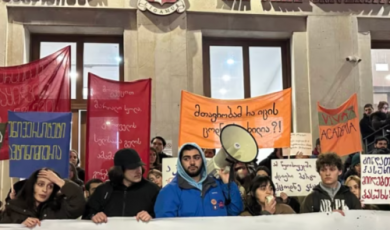
In October 2025, “Georgian Dream” launched a large-scale reform of the education system, developed without the involvement of the academic community or field specialists.[1]
Amid the hastily implemented changes, the Ministry of Education under “Georgian Dream” has overlooked ethnic minorities. Although the reform’s concept document and the official rhetoric surrounding it emphasize improving the quality of education and optimizing the system, the presented concept practically fails to reflect the specific needs of ethnic minorities. This creates problems of legal clarity and equality.
Moreover, several components of the current higher education reform significantly worsen ethnic minorities’ access to higher education. These include: the introduction of the “one city – one faculty” principle; the abolition of in-demand academic programs and/or the reduction of available admission places in them; the dramatic reduction and de facto elimination of programs at Ilia State University—the second most sought-after university among ethnic minorities; and the abolition of a number of academic programs at regional universities. The reform will particularly harm the most financially vulnerable applicants, as well as female applicants and students, who will face additional barriers to accessing higher education as a result of these changes.
The 1+4 Educational Program
Students of non-Georgian-language schools and sectors face numerous challenges in accessing quality education, including inadequate infrastructure, a lack of quality textbooks, and a shortage of sufficiently qualified teachers, including educators trained in bilingual education.[2]
Since 2009, the so-called 1+4 educational program has been implemented with the aim of increasing ethnic minorities’ access to higher education in Georgia and promoting the social integration of ethnic minorities. Within the framework of the program, Azerbaijani, Armenian, Abkhaz, and Ossetian-speaking applicants are able to take the General Skills Test of the national entrance examinations in their native language. The program provides 5% admission quotas at universities for Azerbaijani and Armenian-speaking applicants, and 1% quotas for Abkhaz and Ossetian-speaking applicants.[3]
After passing the national examinations, students enroll in a one-year Georgian language preparatory program. Upon successful completion of this program, they are admitted to the faculty of their choice at the same university. Students also have access to a state educational grant: until 2024, the grant funded 100 Azerbaijani-speaking and 100 Armenian-speaking students, while starting from the 2024–2025 academic year the number of funded students has increased to 200 Azerbaijani-speaking and 200 Armenian-speaking students.[4]
The program was initially conceived as a temporary support mechanism; however, practice has shown that both demand for the program and its effectiveness have increased over the years. In addition to improving access to higher education in Georgia for members of non-Georgian-speaking ethnic minorities, the program also plays an important role in strengthening their language competencies and promoting social integration. According to a recent study[5] conducted by the Social Justice Center and the Institute of Social Studies and Analysis, only 1.2% of surveyed graduates of the program reported no improvement in their knowledge of the Georgian language as a result of the one-year Georgian language preparatory course, while 11.4% reported a moderate improvement in their Georgian speaking, writing, and reading skills. On the other hand, 9.3% of respondents indicated that after completing the one-year course they began speaking Georgian fluently; 18.3% reported that after finishing the course they were able to speak, write, and read Georgian fluently; 29% stated that the course enabled them not only to speak, write, and read Georgian with confidence but also to work with academic materials in Georgian; and 30.8% reported that after completing the course they were able not only to process Georgian-language academic materials but also to produce academic work in Georgian (such as research reports, essays, and similar outputs).[6]
Another particularly important development has been the active involvement of program graduates in schools as assistant teachers, which has been characterized by high levels of acceptance and trust from local communities and has partially helped alleviate the shortage of teachers.
The most visible indicator of the program’s success is the absolute number of beneficiaries enrolled in the Georgian language preparatory program. Since the program was launched (2010), approximately 14,000 applicants have enrolled in it. Compared to the initial year, the annual number of beneficiaries has increased by approximately eleven times.[7] In recent years, around 1,500 applicants have enrolled each year in the Georgian language preparatory program within the framework of the program.[8]
For representatives of ethnic minorities, the process of choosing a university and a profession is multifactorial and is significantly shaped both by the perceived reputation and quality of educational institutions and by their geographical and economic accessibility. The reform introduced by “Georgian Dream” will create significant difficulties for ethnic minorities seeking to obtain higher education. Particularly problematic are the reform’s plans for moving a large part of the student body out of Tbilisi and the introduction of the “one city – one faculty” principle, which will affect both current and prospective students of the 1+4 program.
Risks of Reduced Access to Education for Representatives of Ethnic Minorities
The Impact of the Reform on Current Students of the Georgian Language Preparatory Course
On February 21, 2026, within the framework of the ongoing reform of the higher education system, the Deputy Minister of Education, Zviad Gabisonia, stated during a meeting with students in Akhalkalaki that the 1+4 program will continue and that applicants will still receive state support to deepen their knowledge of the Georgian language and successfully continue their studies in bachelor’s programs.[9]
However, despite this statement, many students—particularly in universities where the 1+4 program enrolls a large number of participants—may face difficulties in choosing a bachelor’s program as early as the 2026–2027 academic year. This is because their universities may no longer have authorization to offer the academic programs that students originally intended to pursue when selecting their university.[10]
In this regard, Ilia State University deserves particular attention. The number of students admitted to the university is being reduced dramatically—from 4,207 last year to approximately 300. Ilia State University is the second most popular university among students enrolled in the 1+4 program (including due to its high-quality Georgian language preparatory program, the implementation of a tutorium program, and a comparatively inclusive environment), and 20% of 1+4 program students study there.[11]
Another notable case is Samtskhe–Javakheti State University, located in a region densely populated by ethnic minorities. As a result of the reform, starting from the 2026–2027 academic year, only pedagogical, agronomy, and veterinary programs will remain at the university. As a consequence of the abolition of numerous programs, students’ opportunities to continue their studies within their own universities will be drastically reduced, and many of them will be forced to choose programs at other universities.
According to a February 26 decree of the Government of Georgia,[12] an additional exception has been established regarding the number of students admitted to Georgian language preparatory programs at higher educational institutions. This exception applies to students who were enrolled, through the Unified National Examinations, in the Georgian language preparatory educational program (1+4 program) at a state-established higher education institution, and who, after completing the program in the 2025–2026 academic year, will continue their studies in bachelor’s programs, integrated veterinary master’s programs, or diploma programs for medical doctors or dentists at state-established higher education institutions.
According to the decree, if a state-established higher education institution does not have the authorization to implement the educational program in which a student wishes to continue their studies, the student is entitled to continue their studies at any higher education institution that has authorization to offer the desired program in the 2026–2027 academic year.
However, this decree does not adequately address the challenges faced by current students of the Georgian language preparatory program at Samtskhe–Javakheti State University, where there is only one university in the region. For example, students who had planned to pursue studies in law will face a dilemma: they will either have to abandon their desired specialization or enroll in a university in another city. For students who are already financially vulnerable, this will represent an additional barrier, making the choice of desired education and career even more dependent on financial resources.
In the case of Samtskhe–Javakheti State University, this issue will remain relevant in the coming years as well, given that the university’s campuses are located in Akhaltsikhe and Akhalkalaki.
It should also be noted that the necessity of continuing studies in another city outside the region creates additional challenges beyond the financial burden, particularly for female applicants. Reports by the United Nations Children’s Fund (UNICEF) Georgia indicate that in regions populated by ethnic minorities, girls’ access to education is significantly influenced by family attitudes, perceptions of safety, and proximity to the place of residence.[13] Research shows that families are more likely to allow girls to pursue higher education if the university is located near their home or if daily commuting from home is possible.
At the same time, geographical distance and the need to rent housing increase not only financial pressures but also cultural and social control risks, which in some cases become a reason for girls to forgo higher education altogether.
Future Students of the 1+4 Program
Practice shows that the overwhelming majority of ethnic minority applicants have historically chosen universities located in Tbilisi and Samtskhe–Javakheti. From 2010 to 2022, at least 97% of applicants enrolled in the Georgian language preparatory course within the 1+4 program chose universities in Tbilisi and Samtskhe-Javakheti (7%).[14] Universities in Kutaisi, Batumi, Gori, and other cities have traditionally been less popular among ethnic minorities. Beyond the general reputation of universities, students’ choices are strongly influenced by social and geographical factors.
First and foremost, ethnic minorities represent a socially and economically vulnerable group. Even when students receive full tuition funding, rent and other living expenses often create a heavy financial burden. Economic difficulties are one of the main reasons why only about 30% of students enrolled in the 1+4 program manage to obtain a bachelor’s degree.[15]
By reducing the number of available places in academic programs at universities in Tbilisi and positioning Kutaisi as an alternative educational center, socially vulnerable youth and those living in regions will most likely be unable to choose their preferred faculty, largely because doing so may involve significant additional costs. As a result, they may be forced to choose between pursuing their desired academic field and obtaining higher education in general.
In the context of Georgia, the Tbilisi factor is particularly important. Due to the geographical proximity of the capital, students from Marneuli and other municipalities in Kvemo Kartli, a region compactly populated by ethnic minorities, often manage to commute daily to Tbilisi without renting accommodation, which significantly reduces the financial burden associated with education. In addition, the labor market in the capital is far more diverse and inclusive, allowing students to find employment while studying in order to cover tuition or living expenses.
Working while studying is particularly common among students from ethnic minority backgrounds, as family financial resources are often limited. In regional universities, proximity to the place of residence becomes a decisive factor. For example, the 36 places available at Samtskhe–Javakheti State University have consistently been filled, indicating the importance of geographical accessibility.[16]
The concentration of educational centers in other cities will also alter the structure of access to education. When pursuing education requires renting housing, covering additional transportation costs, and possibly leaving existing employment, socio-economic status becomes a decisive factor. Socially vulnerable youth and students from regions will face a difficult choice: either pursue their preferred field in another city and take on greater financial risks, or remain with a more accessible option that may not correspond to their professional interests. In practice, a formally neutral system may end up selecting students based on their financial capacity.
In addition, current and former students of the 1+4 program note that studying in Tbilisi is facilitated by the existence of informal support networks (for example, friends and relatives). In the context of the social and cultural marginalization often experienced by minority communities, such networks help newly enrolled students adapt to a new environment and sometimes provide informal economic support, such as temporary accommodation.
As noted above, the proximity of educational institutions to students’ homes often significantly determines girls’ access to education. This factor is also particularly relevant in the case of Tbilisi, due to the capital’s proximity to Kvemo Kartli, a region densely populated by ethnic minorities.
Research shows that the prestige of a university carries not only symbolic value but is also perceived as an indicator of better employment prospects. In this context, universities operating in the capital—such as Ivane Javakhishvili Tbilisi State University and Ilia State University—are especially attractive, as they are traditionally associated with high academic quality and strong competitiveness in the labor market.
For example, there has been particularly high demand among ethnic minority students for the one-year Georgian language preparatory program at Ilia State University, which functioned within the 1+4 model and has been considered especially effective in terms of both language acquisition and academic adaptation. The popularity of the program can be explained by several factors: academic quality, modern methodology, student-centered teaching, and the fact that the university is located in Tbilisi, providing students with real educational and employment opportunities.
Within the Ilia State University program, Georgian language instruction was provided alongside preparation in academic writing, critical thinking, and university culture. The university offered a broad range of disciplines—including social sciences, humanities, business, education, and natural sciences—which allowed 1+4 students to choose from a wide variety of academic programs after completing the language preparatory year.
Against this background, limiting Ilia State University to only the pedagogy program and ABET-accredited STEM specialties will inevitably reduce students’ choices and will effectively eliminate access to the high-quality language support previously available at the university. International practice shows that integrated language programs implemented within academic environments significantly increase the participation and success rates of ethnic minorities in higher education systems. Consequently, weakening such a model may negatively affect both enrollment and completion rates in the long term.
From the perspective of legal analysis, the issue is also linked to the constitutional right to education, which implies not only formal access but also real and effective accessibility. When reforms reduce the geographical accessibility of programs, limit student choice, and create situations in which certain groups must relocate or assume additional financial burdens, the question arises whether such intervention is proportionate to the legitimate aim pursued.
It is particularly important to note that the 1+4 program was originally created precisely to remove language barriers and increase ethnic minorities’ participation in higher education. Its de facto reduction or territorial reorganization, if it results in restricted access in practice, may be considered a disproportionate limitation of the right to education.
Another important aspect relates to the principle of equality, particularly given the structural conditions affecting ethnic minorities. If the changes in practice impose a heavier burden on socially vulnerable individuals, students living in regions, or women, there is a risk of indirect discrimination. A formally neutral decision that in reality disproportionately harms a particular group may conflict with constitutional guarantees of equality.
In this context, the state bears a positive obligation to introduce transitional mechanisms and social guarantees that will ensure the preservation of equal access to education. Changing the territorial principle and relocating educational centers to cities that historically have not been primary destinations for non-Georgian-speaking applicants will, in practice, likely reduce participation in the program, even if the quotas remain formally unchanged. This is particularly evident given that the mobilization of ethnic minority students has historically been concentrated in Tbilisi universities and in regional universities such as Samtskhe–Javakheti State University, where geographical proximity played a crucial role.
Despite the Ministry’s statement that the 1+4 program will continue and that state support will be maintained, many practical questions remain unanswered. It is still unclear in what form and on what scale the program will continue, what guarantees will be provided to students who have already been enrolled, and whether 1+4 program students will be able to benefit from the possibility of free education at state universities envisaged by the reform. Until now, students admitted under the 1+4 program have not had the opportunity to study free of charge even at state-funded – free of charge faculties.
Questions also remain regarding whether, for example, the Georgian language preparatory program at Ivane Javakhishvili Tbilisi State University is prepared to accommodate the increased number of 1+4 students who would ordinarily have enrolled at Ilia State University, Sokhumi State University, or other state universities where a number of academic programs are being abolished as part of the reform.
Under these circumstances, the real educational choices available to young people from ethnic minority communities may diminish, which in turn may deepen social inequality and weaken social cohesion and integration. If, under the new concept, state funding applies only to students enrolled in state universities, it remains unclear how the situation of students who have already been admitted or who transfer to private universities will be protected.
For this reason, any reorganization of the system requires a thorough assessment of its legal, social, and educational consequences, in order to ensure the protection of the right to education, the principle of equality, and the broader objectives of the state’s integration policy.
Abolition of the Multilingual Education Program
“The Unified National Strategy for Education 2022–2030” states that at the level of higher education the government will encourage and monitor efforts aimed at increasing the number of students admitted through various quota mechanisms. In order to make more effective use of the program’s opportunities for students from ethnic minority backgrounds, it is important both to update admission procedures and to increase the number and accessibility of places allocated through quotas. At the same time, higher education institutions will assume responsibility for further improving the quality of the program.[17]
The strategy emphasizes a broad vision of education policy for ethnic minorities, based on the implementation of a unified policy and the creation of a continuous educational chain encompassing pre-school, general, vocational, higher, and adult education. The strategy plans to improve approaches and methodologies for teaching the state language at the pre-school and general education stages. Alongside improving the quality of educational programs and resources (including textbooks for Georgian as a second language), ensuring the availability of appropriately qualified teachers, and enhancing teaching methodologies, Georgian language curricula will strengthen the integration component as a cross-cutting theme and further develop the practical component of Georgian-language communication. The strategy identifies two key priorities: 1. support for the state language and integration, and 2. increasing access to quality education.
One of the strategic goals declared in the document is to ensure the full functioning of the state language, within which a specific objective is to promote higher levels of Georgian language proficiency across all levels of formal and non-formal education.
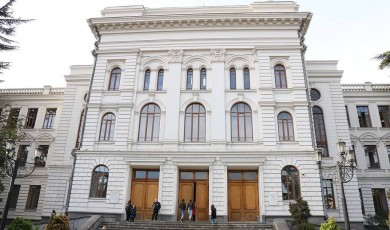
Against this background, it is particularly noteworthy that starting from the next academic year the 300-credit integrated bachelor’s–master’s teacher education program[18] at Ivane Javakhishvili Tbilisi State University will also be abolished and transferred to a gradual phase-out mode until 2030–2031.[19] This program is the only one specifically designed to train bilingual professionals for non-Georgian-language schools.
According to the explanatory note accompanying the reform, the integrated teacher education program represented a longer and less flexible model of instruction, and its removal is expected to optimize the system and strengthen a more flexible, demand-oriented educational model. However, the explanatory note does not specify how the program’s effectiveness was evaluated.
At present, the bilingual education program operates independently from teacher education programs and follows a separate curriculum. Stakeholders involved in the planning and implementation of the program note that it would be desirable to better link it with teacher education programs; however, the issue is highly complex. Synchronizing curricula and developing a unified strategy for preparing teaching staff for non-Georgian-language schools would require greater resources, effort, and political will.
A large proportion of those interested in joining the program as assistant teachers are graduates of the 1+4 program, and in many cases their number exceeds the available employment opportunities within the program. This is particularly important because local communities show a high level of acceptance and trust toward teachers from ethnic minority backgrounds. Their involvement as assistant teachers also represents a valuable opportunity to address staff shortages in schools.
Although obtaining full teacher status requires additional effort and the completion of a one-year teacher preparation program, the existing program constitutes an important resource for ethnic minority representatives both in terms of employment opportunities and improving the educational process in schools.
One of the key challenges that could largely be addressed through this program is the improvement of the quality of education in schools. Teachers working in regions densely populated by ethnic minorities often do not speak the minority language, which creates communication barriers and contributes, along with other factors, to the lower quality of education in these schools. Placing the program in a phase-out mode directly contradicts the “State Strategy for Civic Integration 2021–2030”. Its discontinuation is likely to exacerbate staff shortages. Furthermore, the reform also places at risk the “Bilingual Education Project” initiated by the Ministry of Education, which currently covers more than 200 schools.
As noted above, the abolition of the multilingual education program is additionally linked to the state’s strategic obligations in the fields of civic integration and state language policy. If a program specifically designed to train bilingual staff for non-Georgian-language schools is discontinued, this would contradict the public policy documents that have been adopted by the state itself. This concern is particularly significant given that the state has not presented a new strategy explaining how this program should be integrated into other related educational programs. From a legal perspective, the principle of policy consistency is also relevant here.
Conclusion
The changes discussed above demonstrate that the ongoing reform of the higher education system, despite its stated objectives, in practice creates significant risks for representatives of ethnic minorities. The geographical relocation of programs, the reduction of academic programs, and changes in the location of educational centers significantly restrict real access to education for groups that already face social, economic, and linguistic barriers.
As a result of the reform, the likelihood increases that young people from ethnic minority backgrounds will be forced to choose between their desired professional field and obtaining higher education in general. Particularly vulnerable groups include socially disadvantaged students, young people living in regions, and female students, whose access to education is strongly influenced by financial capacity, geographical proximity, and family circumstances.
At the same time, placing the multilingual education program in a phase-out mode and weakening mechanisms for training bilingual professionals contradicts the strategic documents adopted by the state in the fields of state language policy and civic integration. Such measures not only reduce the inclusiveness of the education system but may also weaken integration policies in the long term and increase the risk of social segregation.
From a legal perspective, these developments raise important questions about the effective realization of the constitutional right to education, the principle of equality, and the state’s positive obligations. Formally neutral changes that in practice disproportionately affect specific social groups may be regarded as carrying a risk of indirect discrimination.
In this context, it is particularly important that ongoing changes in the education system be implemented on the basis of thorough assessments of their social and legal impact, with broad participation from the academic community and local communities. The state bears responsibility for ensuring that the reform process includes transitional mechanisms and social guarantees that genuinely preserve and strengthen equal access to education.
Without inclusive and accessible education, it is impossible to strengthen social mobility, ensure the country’s democratic development, or maintain social cohesion. For this reason, education reform must be based not only on the goal of optimizing the system but also on the principles of equality, integration, and social justice.
[1] For more in-depth analysis of the ongoing reform see: Social Justice Center, “The ongoing higher education reform contradicts national and international human rights law standards”, February 25, 2026. https://socialjustice.org.ge/en/products/mimdinare-umaghlesi-ganatlebis-reforma-etsinaaghmdegeba-adamianis-uflebata-erovnul-da-saertashoriso-samartlis-standartebs
[2] Advisory Committee On The Framework Conventionon For The Protection of National Minorities, Fourth Opinion On Georgia, 2024. Art. 127-129. https://rm.coe.int/4th-op-georgia-en/1680b08a31
[3] Dalakishvili M and Iremashvili N. 2020, Systemic Educational Policy Challanges Faced By Ethnic Minorities, Social Justice Center, 2020. [in Georgian]. https://socialjustice.org.ge/ka/products/etnikuri-umtsiresobebis-mimart-ganatlebis-politikis-sistemuri-gamotsvevebi
[4] Edu.aris.ge. “Within the Framework of the ‘1+4’ Educational Program, Studies Will Be Funded Each Year for 200 Armenian-Speaking and 200 Azerbaijani-Speaking Students.” 15 March 2024. [in Georgian]. https://edu.aris.ge/news/14-saganmanatleblo-programis-farglebshi-swavla-yovelwliurad-200-somxurenovan-da-200-azerbaidjanulenovan-students-daufinansdeba.html
[5] Social Justice Center; Institute for Social Research and Analysis (ISSA). Problems and Barriers in the Employment of Graduates of the 1+4 Educational Program: Analytical Report of a Quantitative and Qualitative Study. 2025. [in Georgian]. https://socialjustice.org.ge/ka/products/1-4-saganmanatleblo-programis-kursdamtavrebulta-dasakmebashi-arsebuli-problemebi-da-barierebi-raodenobrivi-da-tvisebrivi-kvlevis-analitikuri-angarishi
[6] Ibid. p.63.
[7] National Center for Education Research of Georgia, Georgian Language Preparatory Educational Program: Interim Evaluation Report, 2024. [in Georgian]. https://www.ncer.gov.ge/en/post/ქართულ-ენაში-მომზადების-საგანმანათლებლო-პროგრამა
[8] Ibid.
[9] Ministry of Education, Science and Youth of Georgia, “Zviad Gabisonia Met with Representatives of Ethnic Minorities in the Samtskhe–Javakheti Region”, February 22, 2026. [in Georgian]. https://mes.gov.ge/content.php?id=14502&lang=geo&csrt=7820197734442338432
[10] Interpressnews, “The Minister of Education Named Which State Universities Will Announce Admissions for Which Faculties”, February 12, 2026. [in Georgian]. https://www.interpressnews.ge/ka/article/861753-ganatlebis-ministrma-daasaxela-romeli-saxelmcipo-universiteti-romel-pakultetze-gamoacxadebs-migebas
[11] Center for Civic Integration and Inter-Ethnic Relations (CCIIR), The Quota System in the Context of Education Policy. Policy Research Document, 2023. [in Georgian]. https://cciir.ge/images/Quota_System_Policy_Research.pdf
[12] Government of Georgia, Decree No. 83 of the Government of Georgia (February 26, 2026), Article 2(e). https://matsne.gov.ge/ka/document/view/6796851?publication=0
[13] UNICEF, Situation Analysis of Children and Adolescent Rights in Georgia, 2025. https://www.unicef.org/georgia/media/9886/file/UNICEF_CHILDREN AND ADOLESCENT RIGHTS IN GEORGIA_2025-ENG.pdf.pdf?utm_source=chatgpt.com
[14] Center for Civic Integration and Inter-Ethnic Relations (CCIIR), The Quota System in the Context of Education Policy. Policy Research Document, 2023. [in Georgian]. https://cciir.ge/images/Quota_System_Policy_Research.pdf
[15] Tabatadze, Sh., Gorgadze, N. Gabunia, K., Study of the Higher Education Minority Quota System Policy in Georgia, 2010-2019. Centre for Civil Integration and Inter-Ethnic Relations (CCIIR), 2020.
[16] Dalakishvili M and Iremashvili N. 2020, Systemic Educational Policy Challanges Faced By Ethnic Minorities, Social Justice Center, 2020. [in Georgian]. https://socialjustice.org.ge/ka/products/etnikuri-umtsiresobebis-mimart-ganatlebis-politikis-sistemuri-gamotsvevebi
[17] National Center for Education Research of Georgia, Georgian Language Preparatory Educational Program: Interim Evaluation Report, 2024. [in Georgian]. https://www.ncer.gov.ge/en/post/ქართულ-ენაში-მომზადების-საგანმანათლებლო-პროგრამა
[18] The Multilingual Education Program at Tbilisi State University (TSU) is oriented toward preparing teachers of primary education subjects or subject groups who possess subject competencies for Grades I–IV in the native language (Armenian/Azerbaijani), Georgian as a second language, mathematics, natural sciences, and social sciences, as well as additional competencies in one or a maximum of two subjects or subject areas—Georgian as a second language, mathematics, natural sciences, or social sciences—for Grades V–VI. The program’s objective is to prepare teachers in relevant fields/subjects/subject groups in accordance with the National Curriculum. See:
https://www.tsu.ge/assets/media/files/88/300-მულტილინგვური-განათლება.pdf
[19] Law of Georgia on Higher Education, Article 89(21). https://matsne.gov.ge/document/view/32830?publication=122
The website accessibility instruction