საერთო ცხელი ხაზი +995 577 07 05 63


საერთო ცხელი ხაზი +995 577 07 05 63
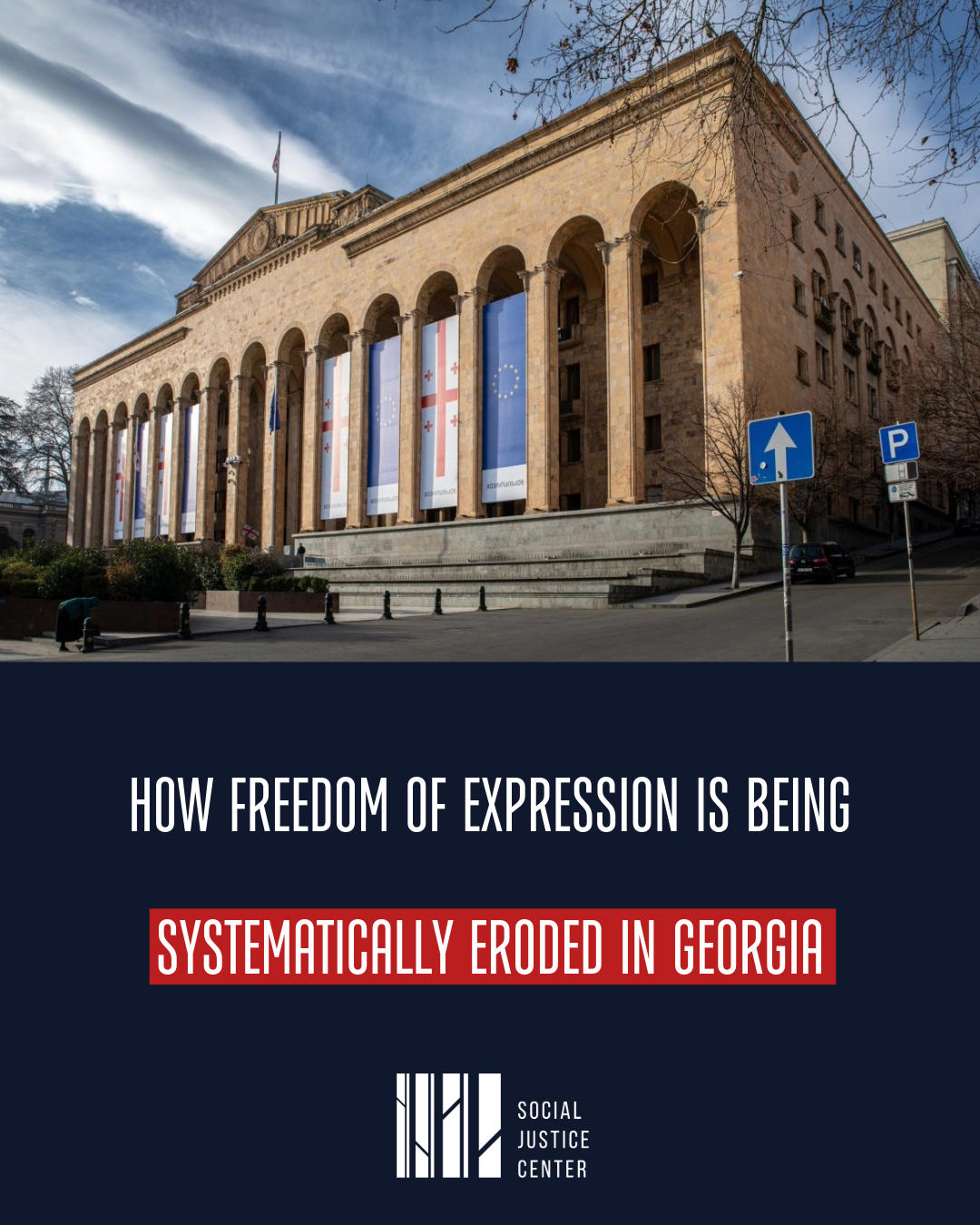
On June 1, the Hate Speech Combating Division of the Human Rights Protection Department of the Ministry of Internal Affairs of Georgia commenced its work. Its function, within the framework of the existing legislative regime, will be to monitor and proactively identify publicly disseminated offensive, dignity-degrading, and hate-speech-related statements in social networks and the media.[1]
According to Social Justice Center, the decision by the “Georgian Dream” government constitutes yet another alarming example of the growing and systematic restriction of freedom of speech and expression in the country in recent years. This development follows a significant deterioration of the legislative framework and the active and selective enforcement of laws against journalists, activists, human rights defenders, and ordinary citizens critical of the government. At the same time, despite the sharp decline in freedom of expression standards at the legislative level, hate speech remains non-criminalized in Georgia. Consequently, the introduction of a system of police monitoring of such expression, whether in physical or online spaces, is alarming and arbitrary. It further expands mechanisms of police control over society and carries the risk of establishing a widespread “chilling effect” on expression, discouraging participation in public debate and fostering political censorship.
Freedom of Expression Under the Constitution of Georgia
Historically, the Constitution of Georgia and the relevant jurisprudence of the Constitutional Court of Georgia have reinforced a high standard of protection for freedom of expression. In terms of the breadth of protection afforded to the right, this standard is closer to the constitutional standards of the United States of America than to the requirements of the European Convention on Human Rights and the case law of the European Court of Human Rights.
Article 17 of the Constitution exhaustively enumerates the grounds upon which freedom of speech and expression may be restricted and provides that: “Restriction shall be permissible only in accordance with law, insofar as it is necessary in a democratic society to ensure national or public security, territorial integrity, to protect the rights of others, to prevent the disclosure of information recognized as confidential, or to ensure the independence and impartiality of the judiciary.”
Moreover, as a result of the extensive constitutional reform carried out in October 2017 under the rule of “Georgian Dream” itself, the protection of “the dignity of others” was removed from the Constitution as an independent ground for restricting freedom of expression. Under the current constitutional text, restrictions may be imposed only “to protect the rights of others,” which necessarily refers to other fundamental rights protected by the Constitution. Accordingly, the constitutional grounds for restricting expression do not include categories such as responsibility, morality, or ethics.
Consistent with the spirit of the Constitution, the Constitutional Court has, over the years, developed a robust standard of protection for freedom of expression. According to the Court: “A free society consists of free individuals living in a free informational space, thinking freely, holding independent views, and participating in democratic processes... The Constitution protects the process of expressing and disseminating opinions, as well as their content and forms.”[2] At the same time, the Court emphasizes that state interference is permissible only under strictly limited circumstances.[3]
Particular importance in the Court’s jurisprudence is attached to the doctrine of the “chilling effect.” According to the Court, freedom of expression experiences a chilling effect when an individual, fearing potential sanctions, refrains from fully exercising the right, thereby fostering self-censorship and leading to the “unjustified closure of society.”[4] Accordingly, when regulating expression, the legislature is obliged to assess with particular caution the impact that liability-imposing norms may have on this right.[5]
According to the Constitutional Court, expression - even when critical and disturbing to society - constitutes a value that enjoys heightened protection, except where it creates an immediate and real danger to others, constitutes a threat, or amounts to incitement to violence. In a landmark 2011 decision, the Plenum of the Constitutional Court examined the constitutionality of a prohibition on calls made during assemblies and demonstrations for the overthrow or violent alteration of the constitutional order.[6] The Court explained that: “The Constitution protects critical opinions, including those that a portion of society may perceive as excessively harsh or inappropriate,” and that “Criticism directed at the authorities, including demands for changing the form of government, cannot serve as grounds for restricting freedom of expression, assembly, or demonstration.” In the same decision, the Court stressed that even statements advocating violence do not automatically give rise to liability. According to the Court, it is necessary to distinguish between statements that “may contain the language of violence but are nevertheless harmless and form part of political, social, or academic discourse,” and those appeals that genuinely seek to bring about violent consequences. Accordingly, the state may intervene only where both an appeal to violence and a real danger of its implementation exists. Otherwise, according to the Court, the restriction would be incompatible with freedom of expression.[7]
The Law of Georgia on Freedom of Speech and Expression, which historically also reflected the constitutional spirit by establishing a high standard of protection for the right - and which, regrettably, has undergone a number of problematic amendments over the years - even in its current version provides that any restriction on expression may be imposed only where it is prescribed by a clear, foreseeable, and narrowly tailored law, and where the interest protected by the restriction outweighs the harm caused by limiting expression. At the same time, the restriction must be “critically necessary for the existence of a democratic society,” must be “non-discriminatory,” and must constitute a “proportionate restriction.”[8]
Therefore, it is clear from the spirit of the Constitution of Georgia that freedom of expression, as one of the essential cornerstones of a democratic society, enjoys a high level of protection. The standard of protection must be particularly strong when expression concerns political speech and, more generally, whenever the state is tempted to interfere with the content of expression. Forms of expression with political content - even where the manner of expression may be perceived by society as shocking, indecent, or offensive - must, according to the Constitution, remain protected. It must also be emphasized once again that the country's fundamental law does not employ categories such as ethics or morality as grounds for restricting freedom of expression. The grounds for limiting the right are finite and clearly defined, and with respect to individual interests, the Constitution refers only to the legitimate interest in protecting other fundamental rights. Even in such cases, the means chosen by the state to restrict expression must be strictly necessary, suitable for achieving the legitimate aim, and the least restrictive available.
Freedom of Expression and Its Limitations in the United States of America and Europe
This broad understanding of freedom of expression more closely resembles the constitutional framework of the United States and the jurisprudence developed by the federal Supreme Court, which permits content-neutral restrictions on expression with respect to its “time, place, and manner” in certain circumstances, but generally does not allow restrictions based on the content of speech itself, regardless of how offensive that speech may be. The principal exception is the test of “real” and “imminent” danger, established by the U.S. Supreme Court as early as 1969, according to which: “The State may not prohibit advocacy except where such advocacy is directed to inciting or producing imminent lawless action and is likely to incite or produce such action.”[9]
With regard specifically to obscenity and profane expression, in a landmark 1971 decision,[10] involving an individual who protested the Vietnam War by wearing a jacket bearing an offensive slogan inside a municipal building, the Supreme Court held that the First Amendment protects public offensive expression when it forms part of political speech. Accordingly, the government may not restrict expression merely because it is offensive or vulgar. Justice Harlan’s famous observation that “one man's vulgarity is another's lyric” has become one of the most widely cited phrases in freedom of expression jurisprudence, emphasizing that emotional and political expression often resists objective categorization. Thus, where the dominant purpose of expression is political, it remains protected under the U.S. Constitution even if the language used may be offensive to portions of society.
Similarly, in another landmark decision,[11] which established the constitutional standards governing defamation claims by public officials while simultaneously defining the broad scope of permissible criticism directed at them, the Court emphasized the fundamental principle that: “debate on public issues should be uninhibited, robust, and wide-open, and that such discussions may naturally include severe, caustic, sharp, and sometimes even offensive criticism of government authorities and public officials”.
It should also be emphasized that these robust standards of freedom of expression extend to the internet and social media platforms. The principal federal regulation in this area is the Communications Decency Act (CDA) of 1996. The purpose of the Act was to encourage online service providers to moderate content on their platforms in a manner that would make them safer for users without restricting freedom of expression. The legislation allows private users to block material they consider objectionable. Service providers themselves are not liable for content created by third parties,[12] while they are further protected from liability when, acting in good faith, they take measures to restrict access to content they consider “obscene, lewd, lascivious, filthy, excessively violent, harassing, or otherwise objectionable.” This regulatory framework has enabled internet service providers to develop their own standards of conduct and systems of self-regulation, largely free from governmental interference.[13]
Compared with the standards established by the Constitution of Georgia, as well as those of the United States Federal Constitution and the jurisprudence of the U.S. Supreme Court, the European Convention on Human Rights provides significantly broader grounds for restricting freedom of expression, reflecting, among other factors, Europe’s difficult historical experience. The development of the European model was profoundly influenced by the catastrophic events of the twentieth century, including the rise of fascist and Nazi regimes, the Holocaust, ethnic and religious persecution, aggressive nationalism, and propaganda, all of which were often disseminated through public communication and mass political mobilization. Following the Second World War, European states increasingly embraced the view that safeguarding democracy may, in some circumstances, require restricting expression that promotes hatred, discrimination, violence, or the destruction of the democratic order itself. This understanding gave rise to the concept of “militant democracy,” which has significantly shaped both the European Convention and the subsequent development of European human rights jurisprudence.
Against this background, Article 10 of the Convention provides that freedom of expression is “subject to duties and responsibilities” and may be restricted by law where “necessary in a democratic society for reasons including national security, territorial integrity, public safety, the prevention of disorder or crime, the protection of health or morals, the protection of the rights or reputation of others, preventing the disclosure of confidential information, or maintaining the authority and impartiality of the judiciary”. At the same time, the Convention prohibits discrimination on specific grounds, particularly those associated with historically vulnerable groups, while also making clear that states may not restrict Convention rights beyond the grounds explicitly provided for therein or pursue limitations for ulterior purposes.
The jurisprudence of the European Court of Human Rights developed under the Convention generally recognizes the fundamental importance of freedom of expression within a democratic society. Article 10 protects not only information and ideas that are favorably received or regarded as inoffensive, but also those that “offend, shock or disturb” the State or any sector of the population. Such are the demands of pluralism, tolerance, and broad-mindedness, without which there is no democratic society.[14] At the same time, any restriction must be prescribed by law meeting the Convention’s qualitative requirements, must be necessary in a democratic society, and must be justified by a legitimate aim. In other words, there must exist a “pressing social need” for the restriction. The Strasbourg Court also recognizes that states enjoy a certain margin of appreciation, although the exercise of that discretion ultimately remains subject to Convention supervision.
Beyond these general principles, particular attention should be paid to restrictions on freedom of expression pursued for the protection of the rights of others, public health, or morality. According to the Court itself, these are among the most frequently invoked legitimate aims relied upon by states when restricting expression. Consequently, the legislative measures adopted at the domestic level vary considerably and include restrictions concerning vulgar content, offensive publications, and other forms of insulting expression.[15]
Notably, when assessing restrictions justified by the protection of morals or reputation, the Court generally affords states a relatively broad margin of appreciation. This is because there is no uniform European conception of morality, either among member states or within their domestic legal systems. As a result, each case requires consideration of the cultural, social, philosophical, and other prevailing values existing within the respondent state. Accordingly, the Court has repeatedly held that national authorities and domestic courts are, in principle, better positioned than international judges to determine the specific requirements of morality, as well as the necessity of restrictions and the appropriateness of sanctions. Nevertheless, this discretion is not unlimited, and such cases remain subject to the Court’s general proportionality analysis. The Court additionally examines the quality of the legislation in question and the reasoning provided by domestic courts, the nature and content of the expression, its impact, the extent of its dissemination and intended audience, and the severity of the sanction imposed.[16]
Regarding hate speech, the general standard of the European Court of Human Rights is that “Respect for the equal dignity of all human beings also constitutes one of the foundations of a democratic and pluralistic society. Consequently, in democratic societies it may, in certain circumstances, be considered necessary to sanction or even prevent all forms of expression which spread, incite, promote or justify hatred based on intolerance, provided that any such restrictions are proportionate to the legitimate aim pursued.”[17]
Consistent with this approach, in 2022 the Committee of Ministers of the Council of Europe adopted a Recommendation[18] on combating hate speech, including in the online environment. According to the Recommendation, hate speech encompasses “all types of expression which incite, promote, spread or justify violence, hatred or discrimination against a person or group of persons, or which contain degrading and dignity-denying characterizations of such persons or groups, on the basis of their real or attributed personal characteristics or status, including race, color, language, religion, nationality, national or ethnic origin, age, disability, sex, gender identity, and sexual orientation”. The extent of liability for such expression depends on its severity. However, states are required, in this process, to follow the relevant case law of the Strasbourg Court and take into account the content of the expression, the political and social context existing at the time of its dissemination, the speaker’s intent, role and public status, the manner and scale of dissemination, and the likelihood that the expression may cause harmful consequences. Relevant considerations also include whether such consequences may occur immediately, the size and nature of the audience, and the characteristics of the targeted group. In other words, the Recommendation requires comprehensive and carefully tailored approaches, including clear legislative definitions and safeguards, in order to prevent the abuse of hate speech laws and the resulting harm to public debate, as well as the unjustified restriction of critical voices, political opponents, and members of minority groups. At the same time, the Committee of Ministers calls upon states to strengthen equality bodies, national human rights institutions, and civil society organizations engaged in the protection of rights. Finally, the Recommendation specifically addresses the regulation of hate speech in the online sphere, while setting out detailed preconditions, criteria, and safeguards governing such regulation.
The European Union has adopted a significantly broader criminal-law approach to hate speech through its 2008 Framework Decision,[19] which prohibits the public incitement of violence or hatred against a group of persons, or a member of such a group, on grounds of race, color, religion, descent, or national or ethnic origin. The Framework Decision also prohibits the public condoning, denial, or gross trivialization of genocide, war crimes, and crimes against humanity where such conduct is carried out in a manner likely to incite violence or hatred against a particular group or its members. These prohibitions likewise apply to online expression. Although EU Member States have incorporated the Framework Decision into their domestic legal systems, they have generally not expanded hate speech prohibitions to additional protected characteristics beyond those specifically required by the Decision. Moreover, the extent and manner of implementation vary considerably among Member States.[20]
The regulation of hate speech on online platforms and social media within the European Union is further addressed by the Digital Services Act (DSA) adopted in 2022. While the DSA is partially comparable to the U.S. legislative framework discussed above, it goes considerably further. Among other things, it requires providers of online services to facilitate monitoring by civil society organizations and public institutions working in this field, establish mechanisms for the prompt handling of notifications concerning hate speech, increase transparency regarding moderation systems, and adopt other measures designed to address illegal content.[21]
Accordingly, it is evident that the Council of Europe, the European Union, and the European Convention on Human Rights regulate restrictions on expression far more extensively than either the Georgian or U.S. constitutional models. Their permissible grounds for restricting expression include, among other considerations, concepts related to morality and ethics. Most importantly, the case law of the European Court of Human Rights grants Member States a certain margin of appreciation with respect to forms of expression that domestic law classifies as hate speech, or as offensive expression that conflicts with the rights of others, public morality, human dignity, or reputation. In other words, the standards developed by the Court represent a minimum level of protection. Where a Member State's domestic law - particularly its constitutional standards - provides a higher level of protection for expression, that higher standard should prevail.
It must also be emphasized that, although hate speech is regulated at both the Council of Europe and European Union levels, such regulation is narrowly defined and directed toward specific forms of expression targeting identifiable social groups or their members on protected grounds. Consequently, its primary purpose is the protection of the safety, rights, and dignity of non-dominant and marginalized groups. The rationale underlying these regulations is not the suppression of criticism directed at the state or dominant political actors. Rather, it is the promotion of substantive equality and the creation of a social environment in which historically discriminated against, and vulnerable groups can enjoy their rights fully and on an equal basis. The European approach rests on the premise that, in certain circumstances, hate speech may produce not only individual harm but may also reinforce structural inequality, social exclusion, and hostility toward particular groups, thereby undermining the fundamental values of a democratic society. Accordingly, European hate speech regulation is rooted in specific historical experiences and operates within clearly defined boundaries. It remains subject to the supervision and review of the European Court of Human Rights and is not formulated in broad, generalized, or vague terms. For this reason, within the European legal framework, the regulation of hate speech is closely linked to the principles of equality, non-discrimination, and minority protection, rather than to restricting critical, offensive, insulting, or harsh expression directed generally at the state, public institutions, or political actors.
The Systematic Erosion of Freedom of Expression in Georgia
Despite the high constitutional and legal standards protecting freedom of expression, the ordinary legislative framework governing this right in Georgia has significantly and systematically deteriorated in recent years. Between 2024 and 2026, of the 77 amendments introduced into the Code of Administrative Offences, 19 concerned restrictions on freedom of assembly and expression. Moreover, these amendments did not address isolated offences but rather encompassed an entire package of measures affecting expressive conduct.
A particularly sharp authoritarian turn in this direction occurred beginning in January 2025,[22] when, in response to the protests of spring 2024 and the subsequent demonstrations of November - December 2024, the Georgian Dream government tightened restrictions on assemblies and demonstrations established under administrative law, increased the amounts of administrative fines, and extended the duration of administrative detention. At the same time, a new provision - Article 173¹⁶ - was added to the Code of Administrative Offences. This provision establishes liability for verbal insults and abusive language directed at state officials, political officeholders, and public servants in connection with the performance of their duties, carrying penalties of up to 4,000 GEL or 45 days of administrative detention. In substance, this offence effectively mirrors an already existing provision of the Code concerning insults directed at law enforcement officers.[23]
Active enforcement of these amendments began intensively during the summer of 2025,[24] when the Ministry of Internal Affairs initiated numerous administrative proceedings against journalists, human rights defenders, activists, and other individuals based on critical statements published on social media platforms.
For example, Facebook posts by journalists Eka Mishveladze, Nanuka Zhorzholiani, and Vika Bukia concerned their use of the term “slave” in reference to Member of Parliament Mariam Lashkhi. Courts at both instances classified the expression as a personal insult directed at the MP and concluded that it contained no political content whatsoever.
During the same period, a citizen participating in a protest outside the Gori Municipal Assembly published a video on social media criticizing police officers who had failed to respond to an apparent traffic violation committed by the driver of a suspicious vehicle parked near the demonstration. The accompanying caption stated: “Instead of writing a lot, watch all the videos and you'll understand what happened. Ministry of Internal Affairs, your dignity-less mother ******. P.S. It's the same police crew and vehicle in all the videos.” According to the Ministry of Internal Affairs, this expression harmed both the honor and dignity of the individual police officers involved and the authority of the law enforcement agency as a whole, thereby exceeding the limits of permissible criticism. The court adopted the Ministry’s position and held that the Facebook post constituted obscenity lacking any political content. Consequently, the court concluded that it “cannot be regarded as conduct protected under the Law on Freedom of Speech and Expression and leaving it without an appropriate response under the rationale of a duty of tolerance would not only lack a legal basis but would also contradict universally recognized moral principles.”
Similarly, Azerbaijani journalist Afgan Sadigov, who was residing in Georgia at the time, was fined administratively for a Facebook post published on 1 April 2026. The post displayed images of police officers and was accompanied by the following statement: “Wherever dictatorship exists, police officers are ready to sell everything for a salary and a police uniform, and they do so with love, devotion, and pride.” The post was classified as an insult directed at the police. According to the court: “The content of this text discredits law enforcement officers and serves to insult the dignity of every police officer, because it is offensive to a police officer—who faithfully protects fundamental human rights and freedoms and safeguards public safety—to be called someone who sells themselves for a salary and a police uniform.” The court further reasoned that “This cannot be regarded as an exercise of freedom of expression, because the post serves to insult law enforcement officers.” Moreover, even though Sadigov’s post plainly constituted generalized and harsh political criticism, the court held that freedom of speech and expression does not protect statements aimed solely at spreading hatred, engaging in obscene insults, or degrading individuals. According to the court “An attack on a person in such a form does not serve the welfare of society and the country, and in such circumstances the legislation provides for an appropriate response by the State.” As supporting authority, the court cited judgments of the European Court of Human Rights concerning the regulation of offensive speech on social media platforms.
Ultimately, courts imposed maximum or near-maximum fines on many of these individuals, while administrative detention was imposed on others.[25] As noted above, in their decisions courts frequently rely, on the one hand, on interpretations by the Supreme Court of Georgia, according to which the internet and social media constitute public spaces where prevailing ethical and moral standards continue to apply. On the other hand, they invoke the grounds for restricting expression contained in the European Convention on Human Rights.
However, the courts generally do so without engaging in a structured analysis of whether the specific statements at issue constituted political expression, notwithstanding the use of offensive or even vulgar language. Their decisions often contain formulaic references to the constitutional importance of freedom of expression, the constitutional grounds for its limitation, and the Constitutional Court’s general observations regarding the role of free expression in a democratic society. Yet they do not meaningfully examine whether the circumstances of the individual cases are compatible with the standards developed by the Constitutional Court. Nor do the courts address a more fundamental question: whether reliance on concepts such as ethics and morality is compatible with a constitutional framework in which the highest legal norm - the Constitution of Georgia - does not recognize ethics or morality as grounds for restricting expression, particularly political expression. Consequently, judicial reasoning largely avoids confronting the tension between ordinary legislation and judicial practice on the one hand, and the higher constitutional standard protecting freedom of expression on the other.
The Political Instrumentalization of Strasbourg Court Judgments by Georgian Dream
Particular concern arises from the manner in which Georgian Dream has invoked individual judgments of the European Court of Human Rights to justify its own political agenda and further restrictions on freedom of expression. In this regard, special attention should be paid to the Court’s judgment of 19 May 2026 in Miladze v. Georgia.[26] Government representatives have repeatedly presented this ruling as proof that European standards support the imposition of strict legal liability for insulting public officials and justify additional restrictions on freedom of expression. However, the actual scope and reasoning of the judgment are considerably narrower and more fact-specific than the political conclusions subsequently drawn from it.
The case concerned a video posted on TikTok by citizen Irakli Miladze, in which he sharply criticized the urban transportation policies of the City of Tbilisi while simultaneously using vulgar and offensive language directed at the Mayor of Tbilisi, municipal employees, and law enforcement officers. At the beginning of the video, the author expressly warned viewers that it contained obscene language and advised those who found such language objectionable not to continue watching.
Administrative proceedings were initiated against Miladze on the grounds of petty hooliganism[27] and failure to comply with a lawful order of a law enforcement officer.[28] The City Court imposed a fine of 2,000 GEL, although the Court of Appeal subsequently overturned the finding relating to disobedience and reduced the sanction to 500 GEL.[29] As in similar cases, the domestic courts referred generally to constitutional standards, the jurisprudence of the Constitutional Court, and the case law of the European Court of Human Rights. Ultimately, however, they concluded that the expression in question was aimed primarily at severely insulting identifiable public officials.
The Strasbourg Court found no violation of freedom of expression in the case. First, it accepted the quality and foreseeability of the applicable law, as well as the legitimacy of the aims pursued, namely the protection of the rights of others and public morality. Consequently, the Court focused its analysis on whether the interference was proportionate and necessary in a democratic society for the achievement of those legitimate aims.
Consistent with its established jurisprudence, the Court reiterated that offensive expression may, in certain circumstances, fall outside the protection of freedom of expression where it constitutes wanton denigration - that is, where the sole purpose of a statement is to insult another person rather than to communicate an idea, opinion, or position on a matter of public concern. At the same time, the Court emphasized that the use of vulgar language is not, by itself, determinative, as such language may serve stylistic purposes. For the Court, style forms an integral part of communication and is protected alongside the substantive content of expression. The Court then turned to the facts of the case and observed that, because the expression had occurred on social media, relevant considerations included the content of the expression, the context in which it was made, the manner and extent of its dissemination, the potential impact of that dissemination, the reasoning of the domestic courts, and the proportionality of the sanction imposed.[30]
Perhaps the most noteworthy aspect of the judgment is that the Court accepted the applicant’s argument that the video formed part of a public discussion concerning Tbilisi’s transportation reform. However, it simultaneously observed that a substantial portion of the video consisted of extremely vulgar and sexually explicit verbal attacks directed at the Mayor and law enforcement officers. According to the Court, these portions contained neither arguments nor criticism but rather verbal aggression devoid of informational value. The Court further stated that such offensive attacks directed at identifiable individuals may fall outside the scope of Convention protection, which does not extend to purely personal insults. Moreover, the Court emphasized that although public officials are generally expected to display a higher degree of tolerance than ordinary citizens, they are entitled to greater protection than politicians, who must tolerate a particularly broad range of criticism.[31] Public officials, the Court noted, must retain public confidence if they are to discharge their duties effectively. Accordingly, even where offensive language is used in the context of a heated debate motivated by a genuine concern for the public interest, this does not grant an author unlimited freedom to employ targeted personal insults against public officials.[32] Ultimately, the Court accepted the domestic courts’ assessment of both the severity of the language used and the relevant moral considerations, relying in part on the doctrine of the national authorities’ superior institutional competence.
The Court also addressed the role of social media as the medium of expression. It observed that, due to the nature of platform algorithms and the speed and scale of dissemination, online communications may be subject to stricter regulation because they create heightened risks for the effective enjoyment of human rights, notwithstanding the applicant’s warning at the beginning of the video.
In addition, the Court attached significance to the relatively modest amount of the fine imposed and to the fact that the State had not required the removal of the video from the internet, had not restricted the applicant’s social media account, and had not imposed any broader form of censorship affecting the applicant’s political activism. These factors were considered relevant to the proportionality analysis.
Ultimately, the Court concluded that, having regard to the margin of appreciation afforded to States, the aggressive nature of the expression, the vulgar language employed, the broad dissemination of the video, the balancing exercise conducted by the domestic courts, and the relatively limited sanction imposed, there had been no violation of the applicant’s right to freedom of expression.
As discussed above in the overview of European freedom of expression standards, the right is subject to a range of limitations, including those intended to protect the rights of others, morality, and human dignity. In such contexts, States generally enjoy a broad margin of appreciation in determining how concepts such as morality and ethics are understood within their respective societies. It is therefore apparent that, when compared to the standards established by the Constitution of Georgia, the Convention framework and Strasbourg jurisprudence provide a significantly different and substantially lower level of protection for expression. Accordingly, the primary obligation of domestic courts should have been to interpret correctly the standards of protection for freedom of expression established by the Georgian Constitution and the constitutional grounds upon which that freedom may be restricted. Furthermore, the Law of Georgia on Freedom of Speech and Expression itself defines the permissible grounds for restriction in exceptionally narrow and precise terms, reflecting the high threshold that must be met before state interference with expression is justified.
Notwithstanding the foregoing, the Strasbourg Court’s reasoning itself raises concerns. The Court clearly acknowledged the political nature of the applicant’s expression and its contribution to public debate. Yet in its final assessment it placed overwhelming emphasis on the vulgar and offensive language directed at public officials. Moreover, reliance on factors such as the State’s failure to require the removal of the video from social media or to impose additional restrictive measures cannot reasonably serve as a supplementary justification for restricting the right, particularly where such measures are not authorized - even under Georgia’s already weakened legislative framework - and ought not to be.
In the present context, however, the more significant concern lies not only in the substance of the judgment itself but also in its political instrumentalization within Georgia. Following publication of the decision, representatives of Georgian Dream repeatedly invoked it as a source of legitimacy for their legislative and political initiatives, creating the impression that the Strasbourg Court had broadly endorsed the strict sanctioning of insults directed at public officials, additional restrictions on freedom of expression, or the expansion of hate speech regulation in accordance with European standards. Such an interpretation extends far beyond the actual scope of the judgment. The Court did not address the criminalization of insults against public officials, the punishment of political criticism, or the compatibility of new restrictive mechanisms governing expression with the Convention. Rather, it examined only whether a specific administrative sanction, imposed under a particular set of factual circumstances, complied with the Convention. Importantly, the Court itself expressly acknowledged both the political character of the expression and its public significance. Consequently, reading the judgment as though it generally authorizes restrictions on critical or harsh expression directed at public officials constitutes a substantial expansion of its reasoning and is not supported by the judgment itself. Against this backdrop, it is particularly troubling that such decisions are being invoked in Georgia within ongoing legislative and political processes in which the tightening of regulations governing freedom of expression and assembly has become an openly stated political objective. Under such circumstances, selective and decontextualized interpretations of Strasbourg Court judgments risk becoming an additional instrument for legitimizing repressive policies.
The Human Rights Crisis in Georgia and the Existing Political Context
The ongoing developments concerning freedom of expression in Georgia cannot be assessed solely through a doctrinal or legal lens, as they are unfolding against the backdrop of broader institutional and political transformations of an increasingly authoritarian character. This context fundamentally alters not only the substantive meaning of legal norms but also the consequences of their application. The process of authoritarian backsliding has been particularly acute in relation to the freedoms of expression and assembly. This assessment has been made by numerous domestic civil society organizations,[33] as well as by the Venice Commission and OSCE/ODIHR.[34] In this context, special mention must also be made of the deteriorated condition of the national judiciary, its close connections to the Georgian Dream government, and the profound lack of judicial independence and impartiality. These concerns have likewise been sharply criticized in relevant assessments issued by the Council of Europe, the Venice Commission, OSCE/ODIHR, and the European Union.
It should also be emphasized that, with each successive wave of legislation restricting freedom of assembly and expression, representatives of Georgian Dream have openly stated that their objective is to control, intimidate, and silence individuals participating in protests and those who hold critical views toward the government.[35] This objective is pursued not only through the prohibition of specific forms of expression, but also through increased administrative fines, longer periods of detention, the aggravation of penalties for certain offences, and, in some instances, the transfer of conduct from the administrative sphere into the realm of criminal law. The creation of a Hate Speech Combating Division within the Ministry of Internal Affairs constitutes yet another step in this direction. It creates a serious risk of the politicization of the concept of hate speech itself and its misuse for partisan political purposes. In circumstances where hate speech remains unregulated under Georgian law, and where the historical rationale for hate speech regulation in Europe has been the protection of vulnerable groups, extending such rhetoric to dominant political actors and law enforcement institutions amounts to yet another manifestation of authoritarian legalism - a process through which legal concepts are stripped of their original meaning and transformed into instruments for the persecution of critical segments of society and minority groups by an authoritarian government.
Finally, Georgian Dream’s reliance on concerns about the form and tone of expression is particularly ironic given that representatives of the ruling party themselves routinely employ hate-filled and derogatory rhetoric toward protesters, opposition-minded citizens, and political opponents. Such labels have included terms such as “stateless,” “akatsuki,”[36] “traitor,”[37] “without a homeland,”[38] “agent,” and similar expressions. Moreover, during the spring 2024 protests against the so-called “Russian Law,” unknown individuals systematically called protesters, their family members, and acquaintances from unidentified telephone numbers. These callers not only threatened them but also subjected them to severe verbal abuse. The connection between these incidents and government-affiliated actors was subsequently indirectly acknowledged[39] by Dimitri Samkharadze, a Member of Parliament from Georgian Dream. Nevertheless, law enforcement authorities have yet to conduct any meaningful investigation or provide any effective response.
Conclusion
The present analysis demonstrates that Georgia’s constitutional framework governing freedom of expression has historically provided a high level of protection and, in this respect, has been substantially closer to the traditions of American constitutionalism than to the European model of freedom of expression. The Constitution of Georgia and the jurisprudence of the Constitutional Court have attached particular importance to the protection of political expression, even where such expression took forms that society might find offensive or objectionable and have regarded state interference as permissible only in narrowly defined and exceptional circumstances.
Nevertheless, the legislative amendments adopted in recent years, together with their enforcement in practice - one of the clearest manifestations of Georgia’s broader authoritarian turn - indicate a gradual shift away from this constitutional balance and toward the systematic erosion of freedom of speech and expression. This trend is particularly visible in the increasing reliance upon concepts such as ethics, morality, dignity, hate speech, and offensive expression when evaluating speech concerning political and public matters, even though the Constitution of Georgia defines the permissible grounds for restricting expression far more narrowly and exhaustively. As a result, a growing gap has emerged between the constitutional standard developed by the country’s fundamental law and Constitutional Court jurisprudence on the one hand, and the practical reality of restrictions imposed upon expression on the other.
Particular attention should be paid to the fact that European models regulating hate speech, offensive expression, and online communications are based upon carefully defined legal frameworks, precise criteria, and effective institutional safeguards. Consequently, the transplantation of isolated elements of those models into the Georgian legal system without the corresponding constitutional and institutional preconditions is deeply concerning and increases the risk that mechanisms restricting freedom of expression will be applied more broadly than permitted by the principles of necessity and proportionality in a democratic society.
Against this background, the establishment of a new hate speech monitoring mechanism within the Ministry of Internal Affairs should not be viewed in isolation. Rather, it must be understood within the broader context of the ongoing transformation and erosion of the legal environment governing freedom of expression. It is particularly important that any new regulatory framework or administrative practice comply with the high standards established by the Constitution of Georgia, eliminate opportunities for arbitrary interpretation, and avoid creating an enhanced “chilling effect” on public discourse.
From a broader political perspective, legislative changes affecting freedom of expression warrant particular scrutiny within systems undergoing authoritarian consolidation, because free public debate and the ability to criticize those in power constitute fundamental guarantees of democratic governance. For that reason, the assessment of ongoing developments in the field of freedom of expression must focus not only on the content of individual regulations but also on the wider institutional and political environment within which those regulations operate. This broader context should be considered whenever legal or political evaluations are made at the international or regional level.
[1] Official statement of the Ministry of Internal Affairs of Georgia, available at: https://police.ge/news/sidzulvilis-enis-tsinaaghmdeg-brdzolis-akhlad-shekmnili-sammartvelo-punktsionirebas-sheudga/10969
[2] Constitutional Court of Georgia, Judgment of 26 October 2007 in the case Citizen of Georgia Maia Natadze and Others v. Parliament of Georgia and President of Georgia, paras. 2.13–2.14.
[3] See the Court's full reasoning:
“A free society consists of free individuals who live in a free informational space, think freely, hold independent opinions, and participate in democratic processes, which imply the exchange and contestation of ideas. Every individual has the right to express his or her opinion or to refrain from expressing it. In this regard, the Constitution is categorical—it prohibits the persecution of a person for his or her opinions and likewise prohibits compelling a person to express an opinion. This is a strict command addressed to the State and its institutions, admitting no exceptions. The Constitution protects the process of expressing and disseminating opinions, as well as their content and forms, while simultaneously establishing the formal and substantive conditions under which these rights may be restricted.”
[4] Constitutional Court of Georgia, Judgment of 14 May 2013 in the case Citizens of Georgia Aleksandre Baramidze, Lasha Tugushi, Vakhtang Khmaladze and Vakhtang Maisaia v. Parliament of Georgia, para. 2-8.
[5] See the Court's full reasoning:
“When regulating freedom of expression, the legislature is obliged to consider the impact of liability-imposing norms on the exercise of the right. The right protected by Article 24 of the Constitution of Georgia (in its former wording) is subject to a ‘chilling effect’ where a person, out of fear of an anticipated sanction, is compelled to refrain from fully exercising the right, and such self-restraint extends even to aspects of expression that are not normatively restricted. Due to the chilling effect, the influence of a legal norm on the exercise of freedom of expression may exceed the scope of its intended regulation and effectively restrict relations that the legislature never sought to regulate. Such regulation of freedom of expression may result in the unjustified closure of society, self-restraint in the exercise of freedoms, and the encouragement of self-censorship in areas of expression that do not require restriction, which is itself tantamount to a disproportionate limitation of the right.”
[6] Constitutional Court of Georgia, Judgment of 18 April 2011 in the case Political Union of Citizens “Movement for United Georgia,” Political Union of Citizens “Conservative Party of Georgia,” Citizens of Georgia Zviad Dzidziguri and Kakha Kukava, Georgian Young Lawyers’ Association, Citizens Dachi Tsaguria and Jaba Jishkariani, and the Public Defender of Georgia v. Parliament of Georgia
[7] See the Court's full reasoning:
“The Constitution protects critical opinions, including those that a segment of society may perceive as excessively harsh or inappropriate. Criticism directed at the government—including criticism of the government in general, of a specific member thereof, or demands for a change in the form of government—cannot serve as grounds for restricting freedom of expression or the rights to assembly and demonstration... Statements calling for violent and/or criminal acts should not automatically give rise to liability in every case. It is important that both the law and its application distinguish between statements that may contain the language of violence but are nevertheless harmless and form part of political, social, or scientific discourse, and, on the other hand, calls to action where the speaker is aware of the likely consequences and intends those consequences to occur... Statements that formally contain calls to violence, or that constitute isolated incidents, do not necessarily create a real risk of violence. The reality of such a risk must be assessed in light of the context and circumstances in which the statement was made. In each case, the competent authority must determine whether the statement constitutes a call for overthrowing the constitutional order or changing the government through violence, and whether there is a real threat of violence. The State is authorized to intervene and terminate an assembly or demonstration only where both criteria are satisfied. A legal norm would be incompatible with the Constitution if it allowed restrictions on freedom of expression without consideration of these criteria.”
[8] Article 8 of the Law of Georgia on Freedom of Speech and Expression.
[9] Brandenburg v. Ohio, 395 U.S. 444 (1969).
[10] Cohen v. California, 403 U.S. 15 (1971). In this case, the applicant, 19-year-old Paul Cohen, appeared in a Los Angeles courthouse wearing a jacket bearing the offensive slogan “Fuck the Draft,” thereby protesting the United States’ involvement in the Vietnam War.
[11] New York Times Co. v. Sullivan, 376 U.S. 254 (1964).
[12] Exceptions and the relevant domestic case law are available at: https://itif.org/publications/2021/02/22/exceptions-section-230-how-have-courts-interpreted-section-230/
[13] European Parliament Briefing, Hate Speech – Comparing the US and EU Approaches, available at: https://www.europarl.europa.eu/RegData/etudes/BRIE/2025/772890/EPRS_BRI(2025)772890_EN.pdf
[14] Handyside v. the United Kingdom (1976).
[15] European Court of Human Rights, Guide on Article 10 of the European Convention on Human Rights: Freedom of Expression, updated February 2026, pp. 116–122. Available at: https://ks.echr.coe.int/documents/d/echr-ks/guide_art_10_eng
[16] Ibid.
[17] Erbakan v. Turkey (2006).
[18] CM/Rec(2022)16 – Recommendation of the Committee of Ministers to Member States on Combating Hate Speech. available at: https://search.coe.int/cm#{%22CoEIdentifier%22:[%220900001680a67955%22],%22sort%22:[%22CoEValidationDate%20Descending%22]}
[19] Council Framework Decision 2008/913/JHA of 28 November 2008 on Combating Certain Forms and Expressions of Racism and Xenophobia by Means of Criminal Law. available at: https://eur-lex.europa.eu/legal-content/EN/TXT/?uri=celex%3A32008F0913
[20] European Parliament Briefing, Hate Speech – Comparing the US and EU Approaches, available at: https://www.europarl.europa.eu/RegData/etudes/BRIE/2025/772890/EPRS_BRI(2025)772890_EN.pdf
[21] Ibid.
[22] Social Justice Center, Critical Analysis of the Legislative Amendments Adopted by Georgian Dream Under an Accelerated Procedure, 13 February 2025, available at: https://socialjustice.org.ge/ka/products/kartuli-otsnebis-mier-dachkarebuli-tsesit-mighebuli-sakanonmdeblo-tsvlilebebis-kritikuli-analizi-1
[23] Article 173 of the Code of Administrative Offences of Georgia.
[24] Radio Free Europe/Radio Liberty (Georgian Service), “This Is a Legal Absurdity” – How People Are Investigated and Punished for Insulting Officials, 13 June 2025, available at: https://www.radiotavisupleba.ge/a/33442360.html
[25] Tabula, Based on Mariam Lashkhi’s Complaint, Tatia Apriamashvili Was Sentenced to 12 Days of Administrative Detention, 30 May 2025, available at: https://tabula.ge/ge/news/735975-mariam-lashkhis-sachivris-sapudzvelze-tatia
[26] Case of Miladze v. Georgia (Application No. 41585/23).
[27] Article 166 of the Code of Administrative Offences of Georgia.
[28] Article 173(1) of the Code of Administrative Offences of Georgia.
[29] Georgian Young Lawyers’ Association, Review of the ECtHR’s Recent Judgment Against the Background of Institutional Risks of Censorship in Georgia, 19 May 2026, available at: https://www.gyla.ge/post/GYLA-cenzurisinstituciuririskebi-evrisasamartlosgadatskvetileba
[30] For examples of this approach in comparable cases, Melike v. Turkey, No. 35786/19, §§ 46–54, 15 June 2021; Străisteanu v. the Republic of Moldova, No. 9989/20, §§ 66–75, 5 June 2025; Avagyan v. Russia, No. 36911/20, §§ 31–37, 29 April 2025; and Kilin v. Russia, No. 10271/12, §§ 71–94, 11 May 2021.
[31] Mamère v. France (2006), § 27; Radio Broadcasting Company B92 AD v. Serbia (2023), § 78; Baena Salamanca v. Spain (2025), § 126.
[32] Janowski v. Poland [GC], No. 25716/94, § 33, ECHR 1999-I; and Wojczuk v. Poland, No. 52969/13, § 96, 9 December 2021.
[33] See, for example, the joint report of civil society organizations, The Human Rights Crisis in Georgia Following the 2024 Parliamentary Elections, available at: https://admin.gyla.ge/uploads_script/publications/pdf/ადამიანის%20უფლებების%20კრიზისი%20საქართველოში.pdf
[34] OSCE/ODIHR, Georgia: Urgent Opinion on the Amendments to the Law on Assemblies and Demonstrations, the Code of Administrative Offences and the Criminal Code of Georgia (as adopted on 6 February 2025), available at: https://odihr.osce.org/odihr/587466
[35] Regarding the amendments to the Code of Administrative Offences adopted on 6 February 2025, the leader of the parliamentary majority, Mamuka Mdinaradze, stated during a briefing that the legislative amendments were intended to combat a “well-trained agent network of foreign powers” and to equip police officers, public officials, and the government with the necessary tools for that struggle. According to him, the legislative amendments initiated in Parliament constituted only the first stage of this plan. See: Briefing by Parliamentary Majority Leader Mamuka Mdinaradze, 3 February 2025, available at: https://www.facebook.com/@GDMamukaMdinaradze/?locale=ka_GE
[36] Myth Detector, Who Are the Akatsuki and Why Does Georgian Dream Compare Protest Participants to Them?, 14 November 2025, available at: https://mythdetector.com/ka/vin-arian-akatsukebi/
[37] Tabula, Kirtskhalia: Street Protests Will Exhaust Themselves Because They Are Based on Betrayal of the Country, 26 November 2025, available at: https://tabula.ge/ge/news/743210-kirtskhalia-kuchis-protesti-tavs-amocuravs-radgan
[38] Tabula, Kirtskhalia: “…Now the Speculation and False Information Will Begin. The Government Is Trying to Protect the Country from the Authors of These Messages, Those Stateless Individuals and Traitors Who Are Directly Funded and Waiting Eagerly… See How Our Laws Have Worked. Now This Agent Network, Financially Restricted and Exhausted, Is Waiting to See Which Direction to Take. Of Course, We Are Protecting Our Country from This Dirty Scheme, Whose Blind Executors, in the Name of Patriotism, Are These Stateless People.” 28 January 2026, available at: https://tabula.ge/ge/news/745010-kirtskhalia-nebismieri-shenighbuli-granti-tu
[39] Radio Free Europe/Radio Liberty, “There Is Evidence That Dimitri Samkharadze Is Behind These Actions” – Chairperson of GYLA, 31 May 2024, available at: https://www.radiotavisupleba.ge/a/32974367.html
The website accessibility instruction